In short: biomass and waste fuels arrive as bales, logs, pallets, husks and shredded refuse, and a cement kiln or boiler wants a uniform particle a few centimetres across. Hammer mills, hogs and shredders from Jeffrey Rader do that size reduction, and the screens and feeders behind them make the fuel flow. BTGC supplies TerraSource Global equipment for Saudi cement plants, power producers and recycling projects.

Saudi cement producers are under pressure to cut fuel cost and carbon, and the Kingdom has more biomass and waste than most people think: date palm fronds and trunks from millions of trees, wood pallets and packaging from the ports and industrial cities, agricultural residues, and municipal waste that the new recycling programmes are starting to sort. Turning that into kiln fuel starts with size reduction.
Matching the machine to the material
| Feed material | Machine | Why |
|---|---|---|
| Palm fronds, trunks, logs, stumps | Wood hog (heavy hammer mill) | Swing hammers and grates handle fibrous, wet, oversized pieces and tolerate stones |
| Pallets, construction wood, bulky waste | Low-speed shredder then hog | Shredder breaks the structure and ejects metal; hog makes the final size |
| Pre-sorted refuse, paper, plastics | Fine shredder or 3D crusher | Produces a fluffy RDF that burns fast in the calciner |
| Husks, shells, dried residues | Hammer mill with fine screen | Light, dry material needs high tip speed and close grates |
What the kiln needs
A precalciner burns alternative fuel in suspension for a few seconds, so particle size, moisture and uniformity decide how much of the fuel actually burns before it reaches the kiln inlet. Typical targets are below 30 to 50 mm for 2D materials (paper, film, textiles) and below 20 to 30 mm for 3D materials (wood, hard plastics), with moisture below 20 to 25 per cent. The size reduction line is therefore built around a target particle spec, with a disc screen to pull out the fraction that is already fine enough and return the oversize to the mill.
The complete line
Receiving and pre-screening: a disc screen ahead of the mill removes fines and sand, which cuts hammer wear by a large margin.
Metal removal: magnets and eddy current separators before the hog protect the hammers and keep metal out of the kiln.
Size reduction: Jeffrey Rader hog or hammer mill with replaceable hammers, grates and wear liners.
Screening and recirculation: disc screen sized to the kiln spec; oversize returns to the mill.
Feeding and conveying: vibratory and Posimetric feeders meter the fuel to the pneumatic or mechanical conveyor that takes it to the calciner, as described in the earlier article on feeding and screening alternative fuels.
Wear, dust and heat
Palm biomass carries sand, and sand eats hammers. Hardfaced or carbide-tipped hammers, reversible rotors and quick-change grates keep the mill running between planned changes, and BTGC holds wear parts in Dammam so a hammer change does not wait for a shipment. Dust control, spark detection and fire suppression are part of the design for any dry biomass line in the Kingdom's climate.
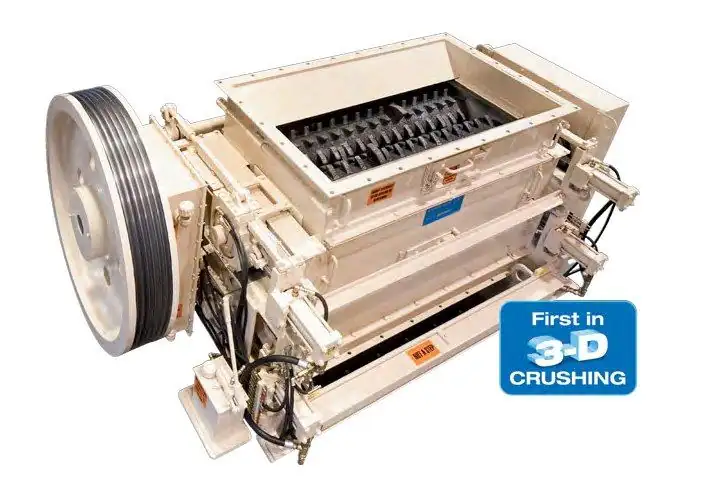
Jeffrey Rader and TerraSource Global from BTGC
Jeffrey Rader, together with Gundlach Crushers and Pennsylvania Crusher, forms TerraSource Global, USA, a supplier of size reduction, feeding, screening and pneumatic conveying equipment to the cement, power, mining and biomass industries. BTGC is the TerraSource Global partner in Saudi Arabia for equipment, wear parts and service. See the mining and material handling page and the mining and minerals sector page.
Questions buyers ask
What throughput can one hog handle? From 5 to more than 50 tonnes per hour depending on material and target size; BTGC sizes the line from the fuel plan.
Can we test our material first? Yes; TerraSource runs sample tests and BTGC arranges the shipment and the report.
Is the equipment suitable for date palm waste? Yes; hogs are used on palm and fibrous biomass in several countries, with wear parts chosen for the sand content.
Contact BTGC
Email info@btc-ksa.com or call +966 13 856 0528. Branches: Dammam, Jubail and Yanbu. Request a quote.