In short: an H1 lubricant is one that may touch food by accident without making it unsafe, and it has to perform as a real industrial oil at the same time. Royal Purple's NSF H1 registered range covers gear oils, hydraulic oils, compressor oils and greases for food, beverage, pharmaceutical and packaging plants. BTGC stocks them in Saudi Arabia and helps plants build a compliant lubrication schedule.
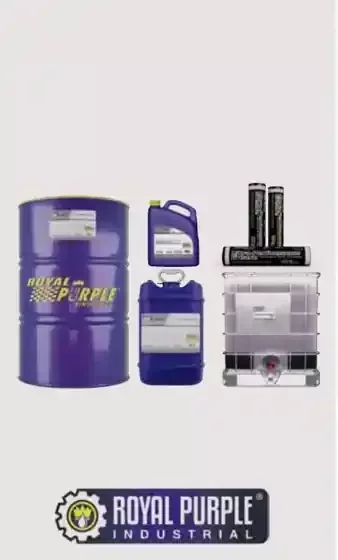
Saudi Arabia's food and beverage industry has grown with the population: dairies, bottling lines, bakeries, poultry processing, sugar refining, edible oil plants and the pharmaceutical factories in the industrial cities. All of them run gearboxes, conveyors, compressors and hydraulics, and all of them are audited against food safety systems (HACCP, ISO 22000, SFDA rules) that ask one question about every lubricant on the floor: what happens if it gets into the product?
H1, H2 and H3
| Category | Meaning | Where it is used |
|---|---|---|
| NSF H1 | Acceptable for incidental food contact, up to 10 ppm in the product | Anywhere above or beside an open product zone |
| NSF H2 | No food contact possible; conventional industrial lubricant | Utilities and equipment away from the line |
| NSF H3 | Soluble oils for hooks and trolleys, washed off before use | Meat and poultry handling |
The practical rule most auditors apply is simple: if a lubricant could reach the product through a leak, a seal failure or a splash, it is H1. Many plants go further and make the whole production hall H1 so that nobody has to decide at the machine.
The performance problem with H1 oils
Early food-grade lubricants were white mineral oils with limited additive packages, because most conventional anti-wear and extreme-pressure additives are not permitted in H1 formulations. They ran hot, oxidised quickly and gave short gearbox life, so maintenance teams quietly kept industrial oil in the "difficult" gearboxes, which defeats the audit. Synthetic H1 lubricants changed that. Royal Purple's H1 range is built on synthetic base oils with its Synerlec additive technology, which forms a tough, slippery film on metal surfaces without using additives that are excluded from H1 registration. The result is a food-grade oil with load-carrying capacity and oxidation life comparable to the industrial products.
The Royal Purple H1 range BTGC supplies
Poly-Guard FDA gear and bearing oils, ISO VG 32 to 680, for gearboxes, chains and circulating systems.
Synfilm FDA compressor, hydraulic and vacuum pump oils.
Barrier Fluid FDA for API Plan 52/53 mechanical seal systems, covered in the earlier article on food-grade barrier fluids.
Ultra-Performance FDA grease for bearings on conveyors, fillers and packaging machines, water-resistant for washdown areas.
Clear FDA chain lubricants and silicone products for ovens, freezers and slides.
Building the lubrication schedule
Converting a plant to H1 is a project, not a purchase. BTGC's lubrication engineers survey the machines, list every lubrication point, assign an H1 product and a change interval, and advise on flushing where a mineral oil is being replaced by a synthetic one. Consolidating to a few products cuts stock, removes the wrong-oil risk and gives the auditor a one-page lubricant register with NSF registration numbers.

Royal Purple from BTGC
Royal Purple LLC, Texas, part of Calumet, formulates synthetic industrial lubricants for compressors, turbines, gearboxes and food processing plants. BTGC is the Royal Purple industrial partner in Saudi Arabia, with stock in Dammam and Jubail and delivery to plants across the Kingdom. See the rotating equipment and lubrication page and the petrochemicals sector page.
Questions buyers ask
Are the products NSF registered? Yes; BTGC provides the NSF registration numbers and certificates with each product for the audit file.
Is H1 oil halal? H1 registration and halal certification are separate; certificates are issued per product, and BTGC supplies the documentation available for the grade you order.
Can H1 oil be used in the utilities too? Yes; many plants use one H1 gear oil everywhere to remove the risk of mixing.
Contact BTGC
Email info@btc-ksa.com or call +966 13 856 0528. Branches: Dammam, Jubail and Yanbu. Request a quote.