In short: a ladle hook carries hundreds of tonnes of liquid steel over people and equipment, so it is built to fail safely or not at all. Laminated hooks, made of many steel plates riveted together, cannot fail suddenly the way a forged hook can, and they can be inspected plate by plate. BTGC supplies Gosan laminated ladle hooks, sheaves and hook blocks for Saudi steel and aluminium melt shops.
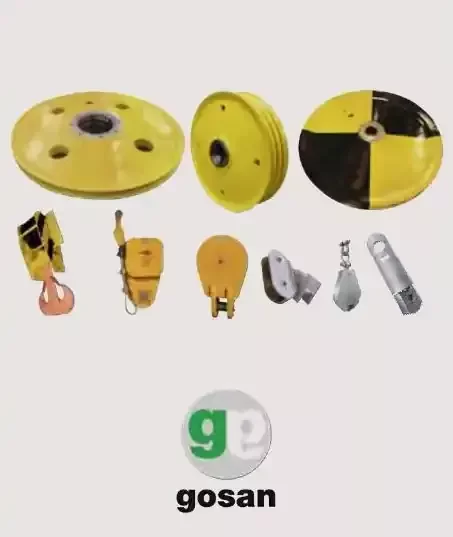
The ladle crane is the most critical lifting machine in a steel plant. At Hadeed, at the DRI-based mills in the Eastern Province and at the aluminium casthouse in Ras Al Khair, cranes carry ladles of 100 to 300 tonnes of liquid metal from the furnace to the caster many times a day. Every component in that load path is classified as safety critical, and the hook is where the load path meets the ladle.
Why laminated?
A forged hook is a single piece of steel. If a crack starts, from a forging flaw, a fatigue cycle or a thermal shock from radiant heat, it can propagate through the full section and the hook fails without warning. A laminated hook is made of 10 to 30 plates of fine-grained structural steel, cut to the hook profile, stacked and riveted together. A crack in one plate stops at the plate boundary; the remaining plates carry the load, and the crack is visible on the surface of the plate at the next inspection. That is why melt shop standards (FEM, DIN 15400 series and most steelmakers' own rules) call for laminated hooks on ladle cranes.
| Characteristic | Forged hook | Laminated hook |
|---|---|---|
| Failure mode | Can be sudden, full section | Progressive, plate by plate, visible |
| Inspection | MPI and UT of a thick section | Visual and MPI of each plate edge |
| Heat exposure | Risk of tempering and residual stress | Thin plates tolerate thermal cycling; heat shields fitted |
| Capacity | Limited by forging size | Built to 500 t and beyond by adding plates |
The rest of the hook block
The hook hangs from a crosshead on a thrust bearing, inside a block carrying the sheaves that the hoist rope runs over. Gosan supplies the complete assembly: laminated hook, crosshead, bearing, side plates, sheaves with sealed bearings and the heat shields that protect the block from ladle radiation. Sheave groove profile and hardness decide wire rope life, as covered in the earlier article on sheaves and wire rope life; on a ladle crane that is a safety matter as much as a cost one.
Inspection and replacement planning
Daily: visual check for deformation, cracks and heat damage, by the crane operator or rigger.
Periodic: measurement of throat opening and wear against the as-new record; MPI of plate edges; bearing check.
Replacement: when wear or throat opening reaches the limit set by the standard, or when any plate shows a crack. Lead time for a new laminated hook is months, so the spare is ordered before it is needed.
Keep the as-new dimensional record and the drawings of each hook on file, so a replacement or a spare set of sheaves can be ordered without a new survey.
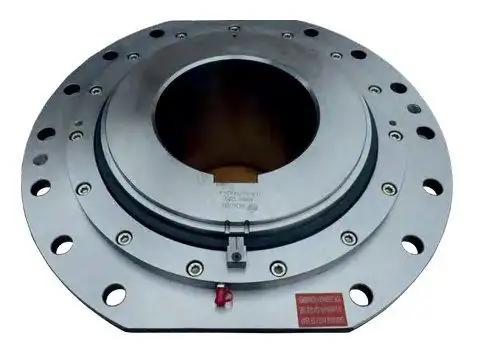
Gosan from BTGC
Gosan, Spain, manufactures crane components: welded and forged sheaves, hook blocks and laminated hooks, crane wheels and barrel couplings for crane makers and steelworks worldwide. BTGC is the Gosan partner in Saudi Arabia, serving steel and aluminium plants, ports, drilling contractors and crane service companies. See the mining and material handling page and the metals and steel sector page.
Questions buyers ask
Can a laminated hook replace a forged one on an existing crane? Yes, if the block is dimensioned for it; Gosan designs the crosshead and block to suit, and BTGC surveys the crane.
What certification comes with the hook? Material certificates for each plate, proof load test certificate, dimensional record and the manufacturer's declaration to the applicable standard.
Do you supply heat shields and bearings? Yes, as part of the complete block or as spares.
Contact BTGC
Email info@btc-ksa.com or call +966 13 856 0528. Branches: Dammam, Jubail and Yanbu. Request a quote.