In short: a seawater intake must take in millions of cubic metres a day and keep out jellyfish, seaweed, sand and fish, without clogging or harming marine life. A passive wedge-wire screen does it with no moving parts. BTGC supplies Elgin Separation Solutions intake screens, built for the high salinity and bio-fouling of the Gulf and Red Sea.
Every desalination plant and every coastal power station in the Kingdom begins with an intake. Debris that passes the intake blocks pumps, fouls condensers and shuts down trains. Traditional travelling band screens catch it, but they have motors, chains and sprays to maintain, and they collect marine life that must be handled and returned.
How a passive screen works
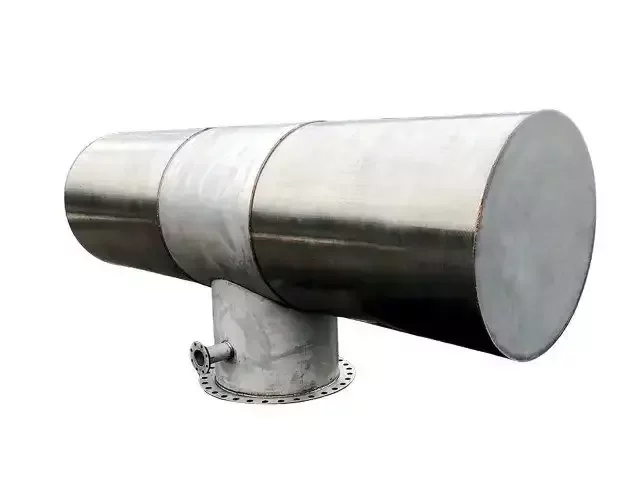
A passive screen is a cylinder of wedge-wire with precisely sized slots, mounted on the intake pipe below the water. Water enters through the slots at a low velocity, typically below 0.15 m/s. At that speed fish and swimming organisms can move away, and debris is not pulled onto the screen. There is no motor and no moving part; periodic air-burst cleaning clears any build-up.
Coanda screens for debris-heavy flows
Where the water carries heavy debris, a Coanda screen uses the way water clings to a curved surface. The flow runs over a curved, tilted wedge-wire panel; water drops through the slots and debris slides off the end. The screen cleans itself continuously. In the BTGC catalogue it is listed for cooling water security in power plants.
| Passive cylindrical screen | Coanda screen | |
|---|---|---|
| Moving parts | None | None |
| Cleaning | Air burst | Self-cleaning by flow |
| Best for | Submerged offshore intakes, pump protection | Debris-heavy surface flows, intake channels |
| Marine life | Low slot velocity lets organisms escape | Debris and organisms carried off the screen |
Built for the Gulf and the Red Sea
The catalogue specifies high-durability stainless steel and copper-nickel for the screens. Copper-nickel resists bio-fouling, which matters in warm, highly saline water where marine growth is fast. Slot size, screen diameter and material are selected for each intake from the flow, the water quality and the local marine species.
Elgin Separation Solutions from BTGC
Elgin Separation Solutions of the USA, part of the TerraSource Global group, supplies water intake and solid-liquid separation equipment. The range BTGC supplies in the Kingdom covers:
Passive and Coanda intake screens for seawater abstraction and cooling towers
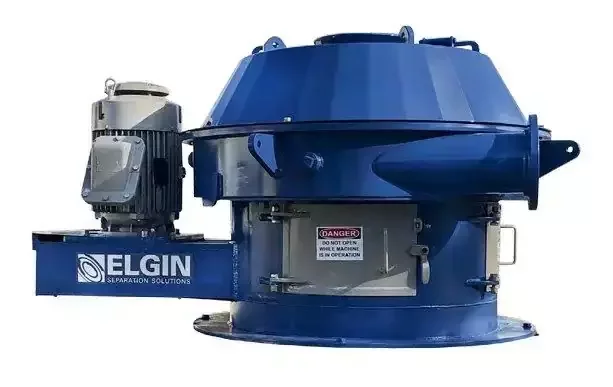
Vertical cuttings dryers that recover up to 95 % of synthetic drilling fluid
Decanter centrifuges for mining tailings, sludge and oily water
Vibrating screens for aggregate classification
Applications in the BTGC catalogue are desalination intake protection, upstream oil and gas and industrial wastewater. See our page for Elgin Separation Solutions in Saudi Arabia and the full process and separation offer.
Upgrading an existing intake
BTGC's project team handles intake screen upgrades as brownfield retrofits: survey, screen selection, fabrication, marine installation coordination and commissioning, without changing the plant footprint. This is listed in the catalogue under cooling and filtration upgrades.
BTGC support in Dammam, Jubail and Yanbu
BTGC supports power and water utilities on both coasts. For a quotation send the design flow, the intake depth and location, the water quality data and the species to be protected.
Questions buyers ask
What slot size? It depends on the pump and downstream equipment; common slots are 1 to 10 mm. Smaller slots need a larger screen to keep the velocity low.
How is bio-fouling controlled? Copper-nickel construction, air-burst cleaning and, where needed, a chlorination point at the screen.
Are screens made to order? Yes, each screen is sized for its intake.
Contact BTGC
Email info@btc-ksa.com or call +966 13 856 0528. Branches: Dammam, Jubail and Yanbu. Request a quote.