In short: a tank farm with fifty manual valves needs fifty operators in the wrong place at the wrong time. Remote valve control puts hydraulic or electric actuators on the valves and a console in the control room, so a jetty line can be isolated in seconds. BTGC supplies Nakakita Seisakusho remote valve control systems, hydraulic power units and actuated valves for Saudi terminals, tank farms and marine applications.
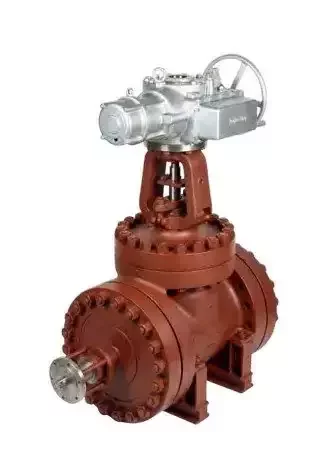
Ras Tanura, Yanbu, Jubail and Jazan move crude, products and chemicals through tank farms and jetties around the clock. The valves on those lines are large, far apart and often in places nobody wants to be during a leak. Remote valve control is how the terminal operator closes the right valves from the control room, confirms they are closed and records it.
What a remote valve control system contains
Actuated valves: butterfly, gate or ball valves fitted with hydraulic or electric actuators, sized for the differential pressure and the required closing time.
Hydraulic power unit (HPU): pumps, accumulators and reservoir that supply pressure to hydraulic actuators; accumulators give enough stored energy to close critical valves after a power failure.
Solenoid valve cabinets: direct hydraulic flow to each actuator, installed close to the valve groups.
Position indication: limit switches or transmitters that report open, closed and intermediate positions.
Control console or PLC interface: mimic panel or screen in the control room, with interlocks, sequences and emergency shutdown groups.
Hydraulic or electric?
| Factor | Hydraulic | Electric |
|---|---|---|
| Fail-safe action | Accumulator or spring closes the valve without power | Needs UPS or a spring-return unit |
| Large valves, fast closing | Compact actuators with high torque | Large, slower units |
| Hazardous areas | Only solenoids and switches need Ex certification | Whole actuator must be Ex certified |
| Installation | Tubing runs and HPU room | Cables only |
Marine and terminal operators tend to choose hydraulic systems for the jetty and tank isolation valves, where fail-safe closing and speed matter, and electric actuators for process valves inside the plant.
Designing the system for the Gulf
Two site conditions drive the design in Saudi Arabia. First, heat: hydraulic oil at 50 °C ambient in a sun-exposed cabinet needs coolers and the right viscosity grade, and solenoid coils must be rated for the temperature. Second, salt: cabinets, tubing and actuators on a jetty are in a chloride atmosphere, so 316 stainless tubing, marine-grade coatings and sealed enclosures are the baseline, not an option. Nakakita builds its systems for shipboard use, which is a harder environment than a jetty.
Valves that match the system
Nakakita's own valves close the loop: concentric and double-eccentric butterfly valves up to 3000 mm for seawater and product lines, gate and globe valves for steam and utility service, and safety valves for the boiler side of a terminal's utilities. Specifying actuator and valve from one maker avoids the torque and mounting arguments that come with mixed packages. For the valve side of seawater intakes, see the earlier article on seawater butterfly valves for desalination intake.
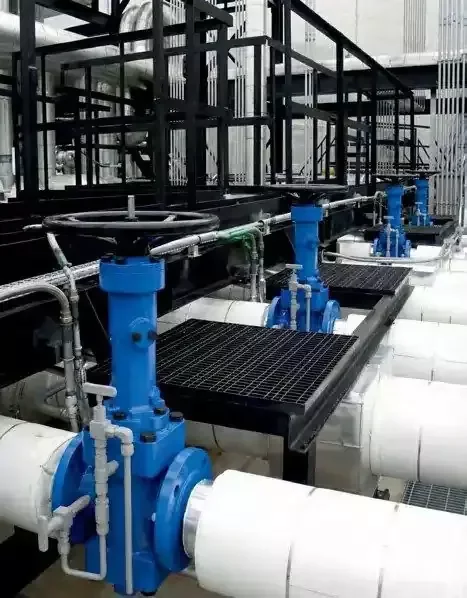
Nakakita Seisakusho from BTGC
Nakakita Seisakusho Co., Ltd., Osaka, has supplied valves and remote control systems to ships, power plants and terminals since 1930 and is a standard supplier to Japanese and Korean shipyards. BTGC is the Nakakita partner in Saudi Arabia for terminals, utilities and process plants, handling system design coordination, supply, commissioning support and spare parts, with valve testing and repair at the BTGC service center in Jubail. See the flow control and valves page and the oil and gas sector page.
Questions buyers ask
Can existing manual valves be automated? Often yes, if the valve stem and mounting pad are sound; BTGC surveys the valves and proposes actuators and brackets.
How is the closing time set? By the actuator size and the flow control in the hydraulic circuit; too fast a closure on a long product line causes surge, so the time is agreed with the pipeline engineer.
What maintenance does an HPU need? Oil condition checks, accumulator pre-charge checks and filter changes; BTGC offers annual service contracts.
Contact the BTGC valve team
Email valves@btc-ksa.com or call +966 13 856 0528. Branches: Dammam, Jubail and Yanbu. Request a quote.