In short: the roll force load cell is the one sensor a rolling mill cannot run without: it feeds the automatic gauge control, protects the stand from overload and tells the operator what the mill is doing. Kelk ROLLMAX load cells are built for the shock, heat and scale of roughing and finishing stands and are the reference in mills worldwide. BTGC supplies and supports them for Saudi steel and aluminium mills.
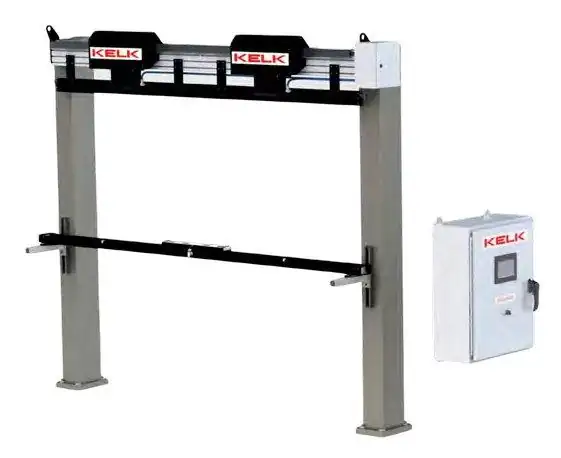
Hadeed's flat and long product mills, the aluminium rolling mills at Ras Al Khair and the rebar mills across the Kingdom all depend on the same measurement: the force each stand applies to the metal. That force sets the gauge, the shape and the roll wear, and when it goes wrong the mill either makes scrap or breaks something expensive. Measuring it reliably in a mill housing, under thousands of tonnes of load, with scale, water and heat all around, is a specialised job.
Where the load cell sits and what it sees
Roll force load cells are mounted under the screw-down (or hydraulic capsule) or under the bottom backup roll chocks, so the full separating force passes through them. A roughing stand can see 40 MN or more, applied in a fraction of a second as the bar enters, with a shock each time the head end hits the rolls. The cell has to resolve small changes in that force for the gauge control loop while surviving the overload of a cobble.
| Requirement | Kelk ROLLMAX design answer |
|---|---|
| Shock and overload | Forged alloy steel bodies with overload capacity well above rated load, no moving parts |
| Off-centre and side loads | Strain gauge arrangement that cancels bending and eccentric loading |
| Heat, water, scale | Hermetically sealed, temperature compensated, armoured cabling |
| Long-term accuracy | Calibration traceable to national standards, drift specified over years not months |
| Mill integration | Electronics with analogue and digital outputs to the mill automation, operator displays |
What good roll force data buys the mill
Gauge and shape: the automatic gauge control uses roll force and gap to hold strip thickness; noisy or drifting force readings show up as thickness variation and off-gauge coil ends.
Roll and bearing protection: force limits and left-right balance alarms stop the stand before a chock or bearing is damaged.
Pass schedule optimisation: measured force per pass lets the process team run closer to the mill's capability.
Condition monitoring: a change in the force signature at constant draft points to roll wear, lubrication problems or bearing damage.
Replacing and upgrading load cells
Many Saudi mills still run the load cells installed with the mill twenty or thirty years ago. Replacement is planned around a roll change or a stand rebuild, with the new cells dimensioned to fit the existing pockets and the electronics upgraded to the current automation interface. Kelk also refurbishes and recalibrates its own cells, and BTGC organises the logistics, the customs and the on-site support from Dammam. The companion measurement on hot strip mills, laser speed and length, is covered in the earlier article on laser velocimeters.
Kelk from BTGC
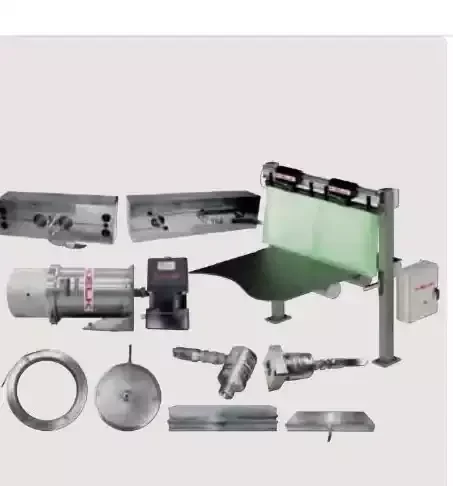
Kelk, Toronto, part of Vishay Precision Group, has specialised in rolling mill measurement for about seventy years: ROLLMAX roll force systems, TENSIOMETER strip tension systems, ACCUSPEED laser velocimeters and ACCUBAND width gauges. BTGC is the Kelk partner in Saudi Arabia, supporting steel and aluminium mills with new systems, calibration, spares and refurbishment. See the mining and material handling page and the metals and steel sector page.
Questions buyers ask
How often should load cells be recalibrated? Kelk cells hold calibration for years; most mills verify them at major shutdowns with a calibration cell or by comparison between stands.
Can Kelk cells replace another maker's cells? Yes; Kelk designs to the existing pocket dimensions and output signal, and BTGC coordinates the survey.
What lead time should we expect? Custom cells are typically 16 to 24 weeks; BTGC advises ordering spares with the main set.
Contact BTGC
Email info@btc-ksa.com or call +966 13 856 0528. Branches: Dammam, Jubail and Yanbu. Request a quote.