In short: sour crude, seawater cooling and chloride-rich streams corrode carbon steel exchangers from the inside. The fix is the right alloy in the right place, tube side or shell side, built to TEMA. BTGC supplies Hemaco engineered shell and tube exchangers and pressure vessels, custom-built in carbon steel, stainless and exotic alloys.
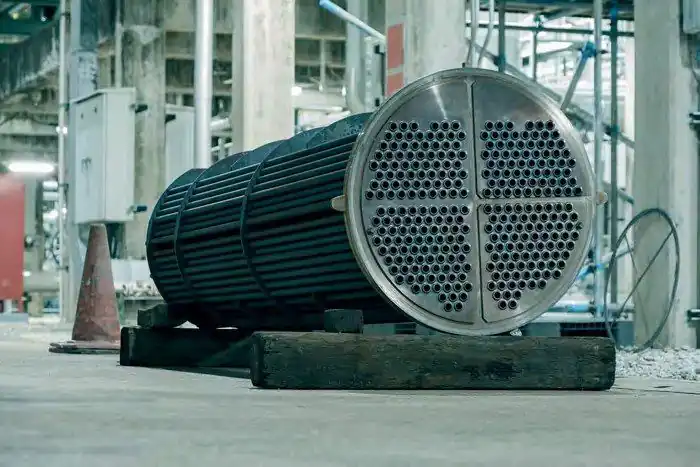
Shell and tube exchangers do the heavy lifting in refineries, gas plants and petrochemical complexes: crude preheat, overhead condensing, reboiling, gas compression cooling. They run at pressures and temperatures that plate exchangers cannot, and they handle fouling fluids. Their weakness is corrosion, and in the Kingdom the corrosive fluids are everywhere.
Where carbon steel fails
| Service | Attack | Usual answer |
|---|---|---|
| Seawater or brackish cooling water | Pitting and crevice corrosion | Titanium or copper-nickel tubes |
| Sour hydrocarbons (H2S) | Sulfide stress cracking | Material to NACE MR0175, stress relief |
| Chloride-containing process streams | Stress corrosion cracking of austenitic stainless | Duplex or super duplex |
| Amine and caustic units | General corrosion and cracking | Stainless or alloy cladding, post-weld heat treatment |
| High temperature hydrogen service | Hydrogen attack | Chrome-moly steels |
The alloy goes where the corrosive fluid is. A titanium tube bundle in a carbon steel shell costs a fraction of an all-titanium unit and lasts as long, if the water is on the tube side.
Built to TEMA
The Tubular Exchanger Manufacturers Association standards define the construction classes, R for refinery service, and the mechanical details that make an exchanger maintainable: tube pitch, baffle spacing, pass partitions, removable bundles. Specify the TEMA class and type, for example BEU or AES, in the enquiry, with the ASME Section VIII design code.
Hemaco from BTGC
Hemaco of Italy designs and fabricates shell and tube heat exchangers and pressure vessels to TEMA and ASME. The range BTGC supplies in the Kingdom covers:
Shell and tube exchangers custom-built in carbon steel, stainless steel and exotic alloys
Pressure vessels: separators, columns and reactors for oil and gas
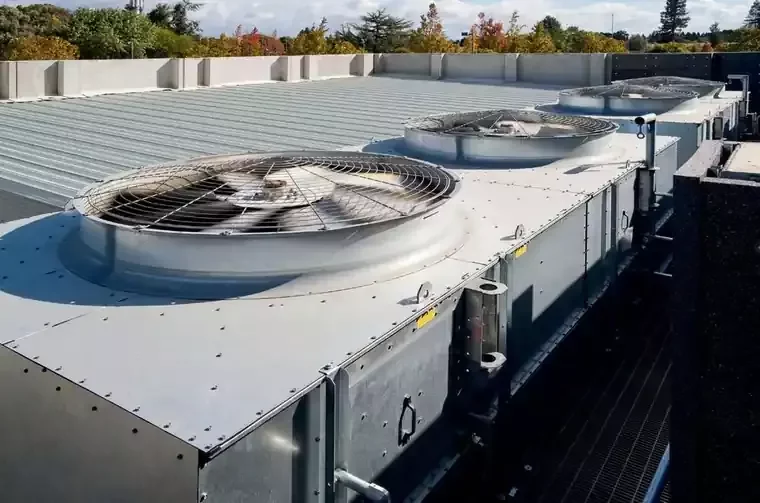
Air-cooled exchangers to API 661, fin-fan coolers for process cooling
Applications in the BTGC catalogue are refinery process units, petrochemical feed heaters and gas compression coolers. See our page for Hemaco in Saudi Arabia and the full thermal management and cooling offer.
Replacement bundles and re-engineering
When the original manufacturer has gone or the drawings are lost, BTGC's asset re-engineering service captures the bundle geometry by 3D laser scan, reviews the metallurgy, and often recommends a better alloy than the 30-year-old original. The new bundle is fabricated to the measured dimensions and delivered in weeks rather than the year quoted for legacy OEM support.
BTGC support in Dammam, Jubail and Yanbu
BTGC supports oil and gas refineries at Ras Tanura, Jubail and Yanbu from branches near all three. For a quotation send the TEMA datasheet or the thermal duty, design pressure and temperature, the fluids and their corrosion concerns, and the existing drawing if it is a replacement.
Questions buyers ask
Duplex or super duplex? Duplex handles most chloride streams; super duplex for hotter, more concentrated chlorides and seawater at temperature. BTGC and Hemaco select by the process data.
Can Hemaco work to Aramco standards? BTGC's document controllers manage the vendor document list against Aramco SAMSS and SAES and SABIC SES requirements.
Are Hemaco units inspected before shipment? Yes, BTGC's QA/QC engineer coordinates third-party inspection and attends the factory test.
Contact BTGC
Email info@btc-ksa.com or call +966 13 856 0528. Branches: Dammam, Jubail and Yanbu. Request a quote.