In short: an air fin cooler rejects process heat to the air instead of to water, so it needs no cooling water, no water treatment and no blowdown. The price is a larger footprint and a design that must work at a 50 °C summer air temperature. BTGC supplies Kelvion air-cooled heat exchangers to API 661 for Saudi refineries, gas plants and petrochemical units, and supports bundles, fans and spares locally.
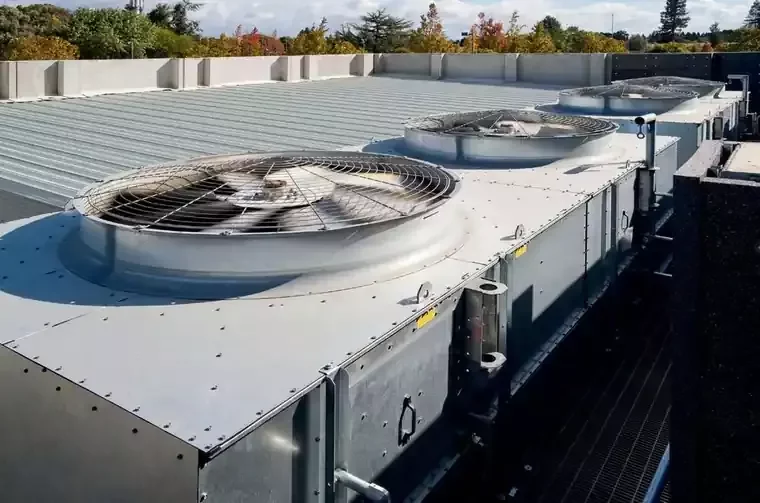
Water is the scarcest utility in the Kingdom. Coastal plants have seawater, but inland gas plants, pipeline compressor stations, mining sites and the new industrial zones away from the coast do not, and even coastal plants pay for every cubic metre of make-up water a cooling tower evaporates. The air fin cooler is how a process plant rejects heat without water, and it is the standard choice for overhead condensers, compressor intercoolers, lube oil coolers and product rundown coolers across Saudi oil and gas.
How an air-cooled heat exchanger works
The process fluid flows inside finned tubes arranged in bundles; axial fans push (forced draft) or pull (induced draft) ambient air across the fins. The fins multiply the air-side surface area by ten to twenty times, which compensates for air being a far poorer coolant than water. The unit is sized for the design air temperature, and that is where Saudi projects differ from most of the world.
Design points for the Gulf
| Issue | Design response |
|---|---|
| Design air temperature of 46 to 50 °C | Larger surface, more bays; process outlet temperatures above 60 °C are realistic, lower ones need trim cooling |
| Hot air recirculation | Induced draft with tall stacks, bay spacing and plot layout studied by CFD on large installations |
| Dust and sand | Wider fin pitch, embedded or extruded fins that resist cleaning damage, access for washing |
| Winter performance | Variable speed or auto-variable pitch fans, louvres where pour point or hydrate formation matters |
| Corrosive atmosphere | Aluminium fins with galvanised or coated tubes; stainless or duplex tubes where the process demands |
Fin types and when they matter
API 661 recognises several fin constructions: L-footed and overlapped L fins for temperatures to about 130 °C, embedded (G) fins to 400 °C and beyond, and extruded fins that give the best corrosion protection and mechanical strength. Saudi plants with sand cleaning and high tube-wall temperatures tend toward embedded or extruded fins; the slightly higher cost is paid back in fin life.
Water-saving hybrids
Where an air cooler cannot reach the required outlet temperature on the hottest days, two options avoid a full wet cooling system: a small trim cooler on cooling water for the last few degrees, or an adiabatic pre-cooling pad that wets the inlet air only during peak hours. Kelvion offers both approaches within its air cooler and dry cooler ranges, and the same thinking is applied to utility cooling by Baltimore Aircoil adiabatic coolers.
Kelvion from BTGC
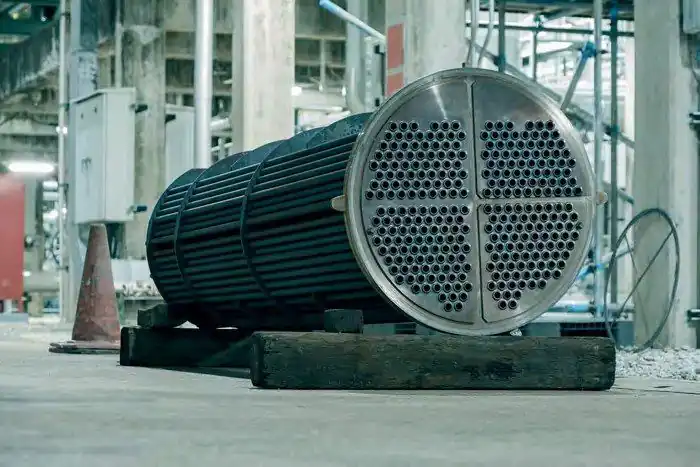
Kelvion Holding GmbH, Germany, formerly GEA Heat Exchangers, designs and manufactures air-cooled heat exchangers to API 661 and ISO 13706, dry coolers, plate heat exchangers and shell and tube units. BTGC is the Kelvion partner in Saudi Arabia for new units, replacement bundles, fans, drives and spares, with site support from Dammam, Jubail and Yanbu. See the earlier article on choosing between plate and shell and tube exchangers, the process and thermal page and the oil and gas sector page.
Questions buyers ask
What information does a quotation need? Process fluid, flow, inlet and outlet temperatures, allowable pressure drop, design pressure and temperature, site design air temperature and the plot space available.
Can an existing air cooler be uprated? Often yes: new bundles with better fins, larger or variable speed fans and adiabatic pads can add 10 to 25 per cent capacity.
Do you supply replacement bundles for other makers' units? Yes, built to the original data sheet and API 661.
Contact BTGC
Email info@btc-ksa.com or call +966 13 856 0528. Branches: Dammam, Jubail and Yanbu. Request a quote.