In short: API 661 is the standard that turns an air cooler from a fan and some finned tubes into a piece of refinery equipment: it fixes the design margins, the header and tube construction, the fan and drive requirements and the inspection and testing. Hemaco builds air-cooled heat exchangers to API 661 and ASME in Italy, and BTGC is its partner in Saudi Arabia for refineries, gas plants and petrochemical units.
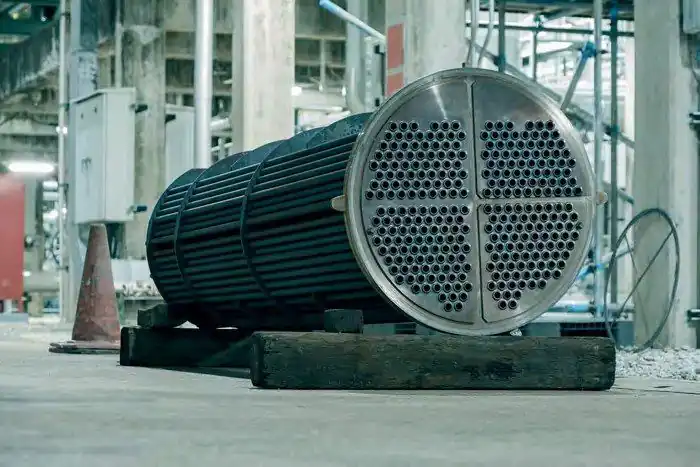
Saudi Aramco, SABIC and the EPC contractors who build for them specify air coolers to API 661 (ISO 13706), usually with their own supplementary requirements on top. A buyer who understands what the standard asks for can read a vendor's proposal properly, and a vendor who builds to it routinely saves the project months of inspection arguments.
What API 661 covers
| Area | Key requirements |
|---|---|
| Thermal design | Design air temperature, fouling factors, fan power margin, minimum face velocity, no credit for wind |
| Tube bundles | Minimum tube wall, fin types and temperature limits, tube-to-header joint, bundle rigidity |
| Headers | Plug, cover plate or manifold type by pressure and fouling; plug and gasket materials; ASME VIII design |
| Fans and drives | Fan tip speed limits, blade pitch, belt or gear drives, vibration switches, motor sizing at minimum air temperature |
| Structure | Plenum and support design, access platforms, wind and seismic loads, hot-dip galvanising |
| Inspection and testing | Hydrotest, fan performance, shop run test, documentation and data sheets |
Saudi supplementary requirements
The operator's standards add to API 661 in predictable places: a design air temperature of 46 to 50 °C, galvanising and coating systems for the coastal atmosphere, sand and dust provisions, specific fan and motor makes, and material requirements for sour service (NACE MR0175 / ISO 15156) where wet H2S is present. A fabricator used to working with operator supplements makes the difference between a smooth document review and a long one, so ask for the reference list with the offer.
Forced or induced draft?
Forced draft units put the fans below the bundle: easier maintenance, lower cost, but the hot air leaves slowly and can recirculate. Induced draft units put the fans above: better air distribution, higher stack velocity and less recirculation, at the price of fan components in hot air. For Saudi sites with large banks of coolers and a hot-air recirculation risk, induced draft is often preferred; for small or isolated units forced draft is common. API 661 allows both and the choice is made in the data sheet.
Special alloys and difficult services
Hemaco's strength is in exchangers that are not catalogue items: air coolers with duplex, super duplex or titanium tubes for sour and chloride services, high-pressure header boxes for hydrotreater effluent, and combined packages with the shell and tube exchangers and pressure vessels described in the earlier article on exchangers in special alloys.
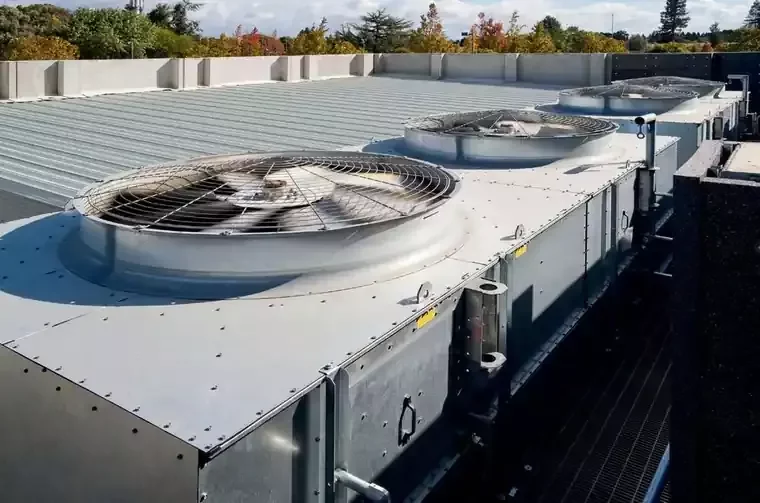
Hemaco from BTGC
Hemaco S.r.l., Italy, designs and fabricates shell and tube heat exchangers, air-cooled heat exchangers and pressure vessels to ASME, TEMA and API 661, with U-stamp and the material certifications Saudi projects require. BTGC is the Hemaco partner in Saudi Arabia, coordinating enquiries, engineering clarifications, inspection visits, shipping and site support. See the process and thermal page and the oil and gas sector page.
Questions buyers ask
What documents come with an API 661 unit? Data sheets, thermal and mechanical calculations, drawings, material certificates, weld procedures, NDT reports, hydrotest and fan test reports and the ASME data report.
Can Hemaco supply replacement bundles for existing coolers? Yes, to the original data sheet or an uprated design, in the original or an improved material.
What delivery time should we plan? Typically 6 to 9 months for a full unit, less for bundles; BTGC tracks the schedule with the factory.
Contact BTGC
Email info@btc-ksa.com or call +966 13 856 0528. Branches: Dammam, Jubail and Yanbu. Request a quote.