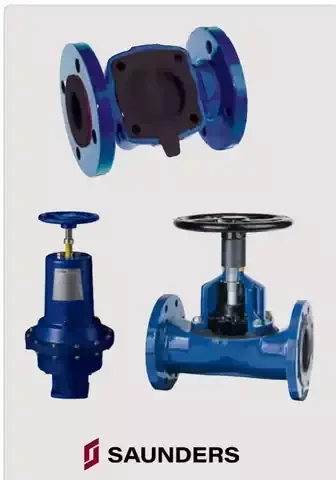
In short: desalination and water treatment plants dose many chemicals: sodium hypochlorite for disinfection, sulphuric acid for pH control, ferric chloride as coagulant, antiscalants, sodium bisulphite and caustic soda. These chemicals are corrosive and some crystallise or release gas, so dosing lines need valves that resist them and do not leak. Lined and plastic diaphragm valves are a common choice because the diaphragm isolates the fluid from the mechanism. BTGC supplies Saunders industrial diaphragm valves.
The Kingdom operates some of the world's largest desalination plants and a growing number of water and wastewater treatment plants. Chemical dosing systems run continuously, and leaks cause corrosion, safety hazards and dosing errors.
Chemicals and valve considerations
| Chemical | Watch out for |
|---|---|
| Sodium hypochlorite | Corrodes most metals; releases gas that can lock lines; avoid trapped volumes |
| Sulphuric acid | Concentration and dilution effects; lined or suitable plastic valves |
| Ferric chloride | Highly corrosive to metals; lined or plastic valves |
| Caustic soda | Crystallises when cold; needs compatible elastomers |
| Antiscalants and bisulphite | Generally milder but check elastomer compatibility |
Valve choices
Rubber or fluoropolymer-lined diaphragm valves for isolation on dosing and storage lines.
Plastic-bodied valves in compatible materials for small-bore dosing lines.
Diaphragm materials matched to each chemical and temperature, using maker compatibility tables.
Venting arrangements on hypochlorite lines to release gas.
Clear labelling and colour coding to prevent wrong connections.
Maintenance tips
Replace diaphragms on a schedule set by chemical and cycles, before they fail.
Check for crystallisation at valve seats on caustic and some acid lines.
Flush lines before maintenance and use proper protective equipment.
Keep spare diaphragms and bonnets for the most aggressive services.
Record leaks and failures to improve material choices.
Saunders from BTGC
Saunders, part of Crane ChemPharma and Energy, makes industrial and hygienic diaphragm valves. BTGC is the Saunders partner in Saudi Arabia. See also hygienic diaphragm valves, seawater butterfly valves and the power and utilities sector page.
Questions buyers ask
Why use diaphragm valves on dosing lines? The diaphragm keeps the chemical away from the stem and bonnet, and lined bodies resist corrosion.
Which diaphragm suits hypochlorite? Choose from the maker's compatibility data for concentration and temperature; PTFE-faced diaphragms are often used.
Does BTGC stock diaphragms? Yes, common sizes and materials for Saunders valves.
Contact the BTGC valve team
Email valves@btc-ksa.com or call +966 13 856 0528. Branches: Dammam, Jubail and Yanbu. Request a quote.