In short: in a crushing plant, wear parts are a running cost as predictable as power, yet many shutdowns are still caused by a hammer, grate or roll segment that wore out sooner than expected. Tracking product size, power and wear measurements, rotating and rebuilding parts at the right time, and stocking the right spares turn wear into a planned job. BTGC supplies TerraSource Global crushers from Gundlach, Pennsylvania Crusher and Jeffrey Rader, with wear parts and support.
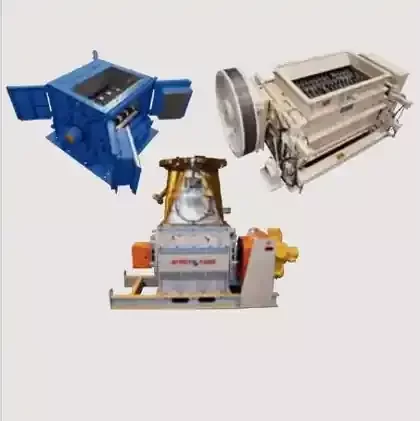
Limestone for cement, phosphate and bauxite in mining, coal and petcoke for kilns and boilers, salt, gypsum and recycled materials are all crushed somewhere in the Kingdom. The crusher's wear parts take every tonne of that abuse. How fast they wear depends on the material's abrasiveness and moisture, the feed size, the crusher setting and the metallurgy of the parts.
Where crushers wear
| Crusher type | Main wear parts | Signs of wear |
|---|---|---|
| Hammermill and impactor | Hammers, hammer pins, grate bars or cages, breaker plates, liners | Coarser product, more oversize, rising power per tonne, vibration from unbalanced hammers |
| Roll crusher | Roll shells or segments, teeth, scrapers | Larger top size, more slabby pieces, loss of grip on large feed |
| Ring granulator | Rings, cage bars, liners | Coarser product, reduced throughput |
| Feeders and chutes | Liners and impact plates | Spillage, build-up, holes in chute walls |
Measure, do not guess
Product size. A regular sieve check of crusher discharge is the earliest sign that hammers or rolls are worn or the setting has opened.
Power and throughput. Trending kWh per tonne shows when wear is costing energy.
Physical measurements. Measure hammer length, grate bar gaps and roll shell diameter or tooth height at each inspection, and plot the wear rate.
Vibration. A sudden rise on a hammermill often means a broken or unevenly worn hammer.
Getting more life from wear parts
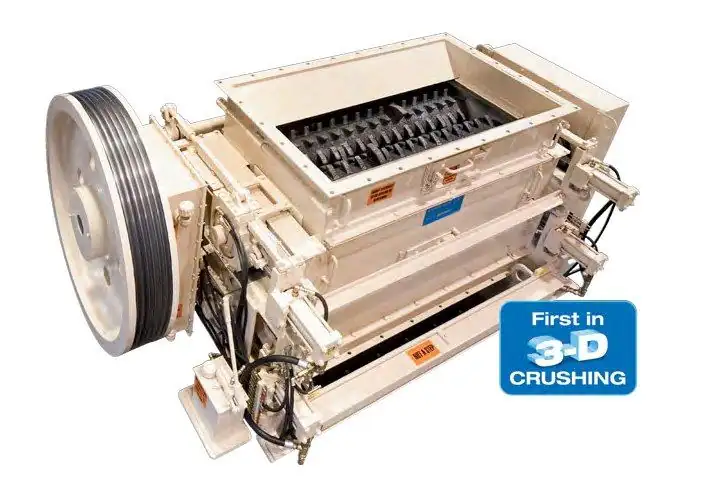
Reverse or rotate hammers when the first face wears, where the design allows, and replace them in matched weight sets to keep the rotor balanced.
Adjust grate or breaker plate settings as parts wear to hold product size, within the maker's limits.
Rebuild roll shells or hammers with hardfacing where the base metal and design allow; fit new parts where cracking risk is high.
Choose metallurgy for the material: manganese steel for impact, high-chrome or carbide-tipped parts for abrasive, lower-impact duties.
Keep tramp metal out with magnets and metal detectors ahead of the crusher; one loose bolt can break a set of hammers.
Planning the spares
Stocking every wear part for every crusher is expensive; stocking none guarantees long downtime, because many parts are made to order. A practical approach is to hold one full changeout set for each critical crusher, order the next set when the installed parts reach about half their life, and agree delivery times before the shutdown programme is fixed. The articles on crushing petcoke and coal and biomass size reduction describe the crusher types in more detail.
TerraSource Global from BTGC
TerraSource Global, owned by Astec Industries, brings together Gundlach Crushers, Pennsylvania Crusher and Jeffrey Rader for crushers, feeders, screens and wear parts. BTGC is the TerraSource Global partner in Saudi Arabia; see also the ASTEC profile and the mining and minerals page.
Questions buyers ask
Can wear parts be supplied for older crushers? Yes. Parts for TerraSource crushers are identified from the serial number, so BTGC needs the nameplate details.
Is hardfacing hammers worth it? Often yes for abrasive materials, if it is done to a qualified procedure and the hammers are rebalanced as a set.
How do we reduce unplanned crusher stops? Measure wear at fixed intervals, plot the trend, and schedule changeouts before product size or vibration limits are reached.
Contact BTGC
Email info@btc-ksa.com or call +966 13 856 0528. Branches: Dammam, Jubail and Yanbu. Request a quote.