In short: bearing failures are the most common cause of electric motor breakdowns, and lubrication is behind many of them. Too little grease, too much grease, the wrong grease or two incompatible greases mixed together all shorten bearing life, and the Kingdom's heat makes each mistake worse. A simple programme (the right grease, intervals adjusted for size, speed and temperature, correct quantities and purging) keeps motor bearings running for years. BTGC supplies Royal Purple synthetic greases and supports motor bearing work at its Jubail service center.

A plant may have thousands of motors driving pumps, fans, compressors and conveyors. Most have grease-lubricated rolling bearings that are relubricated by hand on a route. When those routes use the wrong grease, the wrong quantity or the wrong interval, failures follow, often blamed on the bearing or the motor rather than on the grease gun.
Choosing the grease
| Property | What to look for in motor bearings |
|---|---|
| Thickener | Polyurea and lithium complex greases are widely used in electric motors; polyurea is common in factory-filled motor bearings |
| Base oil viscosity | Often around ISO VG 100 for medium-speed motor bearings; confirm with the bearing maker's calculation for speed and temperature |
| Consistency | Usually NLGI 2, or as the motor maker specifies |
| Base oil type | Synthetic (PAO or ester) bases extend grease life at high temperature |
| Temperature range | Dropping point and upper operating limit well above the summer bearing temperature |
Compatibility matters
Mixing greases with different thickeners can make the mixture soften and run out of the bearing, or harden. Polyurea and lithium-based greases, for example, are often incompatible. Before changing grease type, check compatibility charts and, when in doubt, purge the old grease completely during an overhaul. Mark each motor with its grease type so route lubricators do not mix products.
How often and how much
Relubrication intervals depend on bearing size, speed, temperature and orientation; use the motor nameplate or the maker's chart rather than one interval for every motor.
As a common rule of thumb, the relubrication interval halves for every 15 °C rise in bearing temperature above about 70 °C, so Saudi summer conditions shorten intervals.
Over-greasing is as harmful as under-greasing: the bearing churns the excess, heats up and can push grease into the windings.
Add grease slowly with the motor running where it is safe to do so, with the drain open so old grease can escape, and let the motor run before closing the drain.
Use the quantity on the nameplate or from the bearing maker's formula, and calibrate grease guns so the number of strokes delivers it.
Signs of lubrication problems
Bearing temperature rising after greasing usually means over-greasing; it should settle as the excess is expelled.
High-frequency vibration and noise point to lubricant starvation or contamination.
Hardened, darkened grease at overhaul shows oxidation from heat or an interval that is too long.
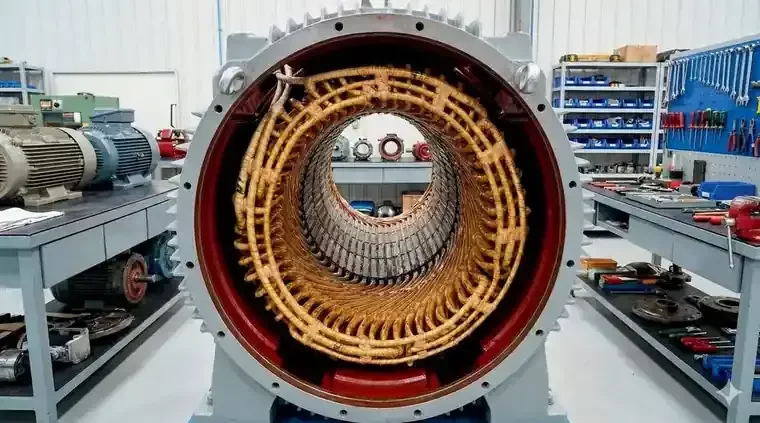
Grease found in the windings points to over-greasing or a blocked drain.
On motors driven by VFDs, frosted races may be electrical damage rather than lubrication, as explained in bearing currents in VFD-driven motors.
Royal Purple from BTGC
Royal Purple, part of Calumet, formulates synthetic industrial greases and oils for high-temperature, high-load and long-interval duty. BTGC is the Royal Purple industrial partner in Saudi Arabia, alongside Bel-Ray and Calumet, and the BTGC service center in Jubail carries out motor bearing replacement and overhaul. See also bearing life with Synerlec and the rotating equipment and lubrication page.
Questions buyers ask
Can we switch our motors to a synthetic grease? Yes, after checking compatibility with the existing grease; if they are not compatible, purge the old grease at the next overhaul or follow the maker's changeover procedure.
Do sealed bearings need greasing? No. Sealed-for-life bearings are not relubricated and are replaced at the end of their life.
How do we set intervals for hundreds of motors? Group motors by bearing size, speed and environment, use the maker's charts for each group, and adjust using vibration and temperature results.
Contact BTGC
Email info@btc-ksa.com or call +966 13 856 0528. Branches: Dammam, Jubail and Yanbu. Request a quote.