In short: variable frequency drives save energy and soften starts, but the fast switching of the inverter puts a common-mode voltage on the motor that can discharge through the bearings. The result is electrical erosion: frosted races, washboard fluting, noisy bearings and early failure, sometimes within months. The cure is a system design that gives the current a better path: insulated bearings, shaft grounding, symmetrical shielded cable and proper bonding. BTGC supplies WEG medium and high voltage motors and drives configured for VFD duty and repairs damaged motors at its WEG approved service center in Jubail.
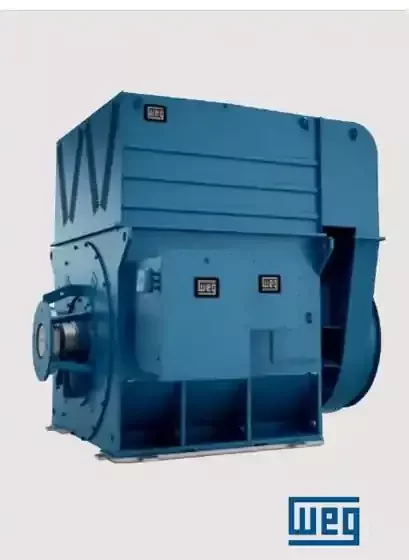
A typical story: a pump or fan motor is converted from direct-on-line starting to a VFD to save energy. A year later the bearings are noisy, vibration analysis shows bearing defect frequencies, and the removed bearing has a grey, frosted race with evenly spaced ridges like a washboard. The grease is dark. The bearing did not fail from load or lubrication; it was machined by millions of tiny electrical discharges.
Where the current comes from
A PWM inverter switches very fast, and the sum of the three phase voltages at the motor is no longer zero as it is on a sine-wave supply. This common-mode voltage couples through the motor's internal capacitances onto the rotor and shaft. When the voltage across the bearing's oil film exceeds its breakdown level, it discharges through the rolling elements. IEC TS 60034-25 describes the mechanisms and the measures that limit them.
| Type of bearing current | Typical motors | Mechanism |
|---|---|---|
| Capacitive discharge (EDM) | Small and medium motors | Shaft voltage builds up and discharges through the oil film in short sparks |
| Circulating high-frequency current | Larger motors, roughly 100 kW and above | Common-mode current in the stator induces a voltage along the shaft, driving current through one bearing, the frame and the other bearing |
| Rotor ground current | Installations with poor frame earthing or bonding | Current finds its way to earth through the bearings and the driven machine, often damaging pump or gearbox bearings too |
Signs of electrical bearing damage
Frosted or matt grey raceways, often with fluting: evenly spaced ridges across the race.
Micro-craters visible under magnification on balls or rollers.
Grease darkened by metal particles and burnt oil.
Rising high-frequency vibration and noise at bearing defect frequencies.
Damage in the driven equipment's bearings as well as the motor's.
How to prevent it
| Measure | What it does |
|---|---|
| Insulated bearing (usually non-drive end) or ceramic rolling elements | Breaks the circulating current loop through the bearings |
| Shaft grounding brush or ring at the drive end | Gives shaft voltage a low-impedance path to the frame instead of through the bearing |
| Symmetrical shielded motor cable with 360-degree gland termination | Returns common-mode current to the drive along the shield, not through the motor and driven machine |
| High-frequency bonding between motor frame, driven machine and drive | Keeps frame and driven machine at the same potential |
| Insulated coupling | Stops current passing into the driven machine's bearings |
| Common-mode or output filters at the drive | Reduce the common-mode voltage and the rate of voltage rise at the source |
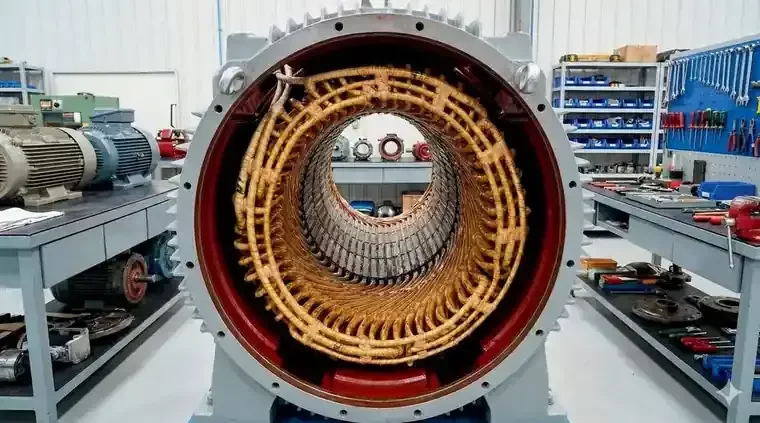
No single item works on every installation. Large MV motors on drives usually combine an insulated non-drive end bearing with a shaft grounding device and correct cabling, and the winding insulation must also be rated for the voltage stresses of inverter duty, as covered in preventing stator winding failure.
When retrofitting a VFD to an existing motor
Check with the motor maker that the insulation system suits inverter duty.
Fit an insulated non-drive end bearing at the next overhaul, and a shaft grounding device at the drive end.
Review the cable type and the earthing and bonding scheme, not just the motor.
Measure shaft voltage after commissioning and trend bearing vibration in the first months.
WEG motors and drives from BTGC
BTGC is the WEG partner in Saudi Arabia for medium and high voltage motors and MV drives, and new WEG motors for VFD duty can be specified with insulated bearings and shaft grounding. The BTGC service center in Jubail, a WEG approved service center, inspects and repairs motors with electrical bearing damage and fits insulated bearings during overhaul. See also converting MV soft starters to VFDs and rewind or replace decisions.
Questions buyers ask
Do all motors on VFDs need insulated bearings? Not all. Smaller motors may only need correct cabling and bonding; larger motors on drives usually need an insulated bearing and a shaft grounding device. BTGC reviews the installation.
Can fluting be repaired? The damaged bearing must be replaced, and the cause must be fixed, or the new bearing will fail the same way.
Can shaft voltage be measured on site? Yes, with an oscilloscope and a shaft voltage probe while the motor runs on the drive; the result shows which measures are needed.
Contact the BTGC power division
Email power@btc-ksa.com or call +966 13 856 0528. Branches: Dammam, Jubail and Yanbu. Request a quote.