In short: medium voltage cables carry power from substations to motors, transformers and switchgear across plants, and a wrongly sized or poorly installed cable is a long-term risk. Most MV cables today are XLPE insulated to IEC 60502-2. The key choices are conductor material and size, screen and armour design, sheath material, and derating for the actual soil, depth, grouping and ground temperature, which in Saudi Arabia are often higher than standard assumptions. BTGC supplies Bahra Electric cables made in the Kingdom.
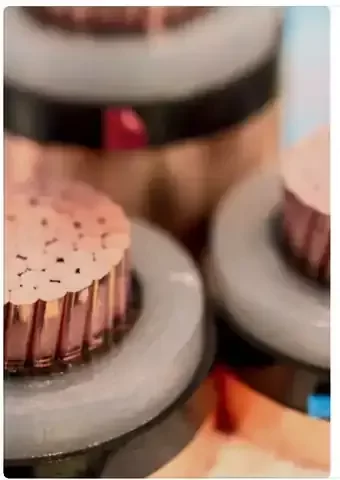
Plant expansions, new industrial cities, renewable projects and utility networks in the Kingdom use large quantities of 13.8 kV and 33 kV cable. Cable failures often appear years after installation, at joints and terminations or where the cable has been running hotter than its design.
Main construction choices
| Element | Options and notes |
|---|---|
| Conductor | Copper for compact size and lower losses; aluminium for lower cost and weight on long runs |
| Insulation | XLPE rated 90 degC continuous, to IEC 60502-2 for 6 to 30 kV |
| Screen | Copper tape or wire screen sized for the earth fault current and duration |
| Armour | Steel wire armour for multicore cables; aluminium wire armour for single-core cables to avoid heating from magnetic losses |
| Sheath | PVC or PE for general use; low smoke zero halogen where people may be exposed to fire smoke |
Derating for site conditions
Ground temperature: deep soil in the Kingdom is often warmer than the 20 degC used in many rating tables.
Soil thermal resistivity: dry sand can be much worse than the standard value; thermal backfill helps.
Grouping: cables laid close together heat each other; spacing and formation matter.
Depth of burial and direct sun on cables in air or trays.
Check voltage drop and short-circuit withstand of conductor and screen as well as current rating.
Installation and testing
Respect minimum bending radius and maximum pulling tension during laying.
Use jointing and termination kits matched to the cable and installed by trained jointers.
After installation, carry out sheath integrity tests and AC or VLF withstand testing; tan delta and partial discharge tests give a baseline for future condition checks.
Record cable routes, joint positions and test results for the life of the cable.
Plan periodic condition assessment on critical feeders.
Bahra Electric from BTGC
Bahra Electric is a Saudi manufacturer of medium and high voltage power cables, low voltage and control cables, and busways. BTGC is the Bahra Electric partner for plants and projects. See also gas-insulated switchgear, distribution transformers for Saudi conditions, the electrical power systems page and the electrical power systems page.
Questions buyers ask
Copper or aluminium conductor? Copper is smaller and has lower losses; aluminium saves cost and weight on long feeders. Both are common at medium voltage.
Why use aluminium armour on single-core cables? Steel armour around a single conductor carries induced currents and heats up; aluminium is non-magnetic.
Does BTGC supply locally made cables? Yes, Bahra Electric cables are made in the Kingdom, which supports local content.
Contact the BTGC power division
Email power@btc-ksa.com or call +966 13 856 0528. Branches: Dammam, Jubail and Yanbu. Request a quote.