In short: in a diaphragm valve the flow only touches the body lining and the diaphragm, never the stem or bonnet parts. With a soft rubber lining, a straight-through body and a reinforced diaphragm, the valve absorbs abrasive particles instead of being cut by them. That makes lined diaphragm valves a common choice for slurry, tailings, thickener underflow and reagent lines in mineral processing. BTGC supplies Saunders diaphragm valves in Saudi Arabia.
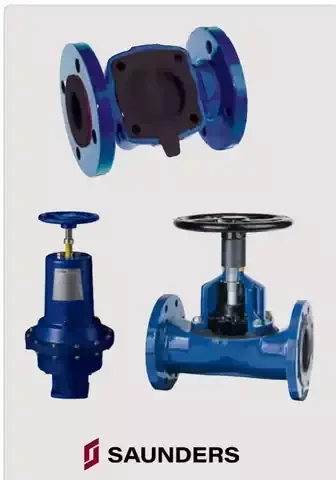
Phosphate, gold, copper and bauxite operations in the Kingdom move large volumes of abrasive slurry and process water. Metal-seated valves wear quickly in this service, and leaking stem packings spread slurry around the plant.
Weir or straight-through
| Design | Strengths | Typical use |
|---|---|---|
| Weir type | Short diaphragm stroke, long diaphragm life, good throttling | Clean or mildly abrasive water and reagents |
| Straight-through (full bore) | Unobstructed flow, can be rodded, less build-up | Slurry, tailings, viscous and solids-laden fluids |
Lining and diaphragm choices
Soft natural rubber linings resist abrasion by fine particles well at moderate temperatures.
Hard rubber, synthetic rubbers and other linings suit chemicals and higher temperatures; check the media first.
The diaphragm grade must match both the media and the temperature, and reinforced diaphragms take higher pressures.
Bodies are usually cast or ductile iron behind the lining, which costs far less than alloy valves.

Getting long life in slurry
Keep velocity within the range advised for the lining to limit erosion.
Avoid throttling hard against a high pressure drop in abrasive service, where erosion concentrates at the seat.
Flush lines before closing where solids settle, so the diaphragm closes on a clean seat.
Use the correct bonnet torque after a diaphragm change; see diaphragm valve maintenance.
Keep spare diaphragms for critical lines and track change intervals.
Saunders from BTGC
Saunders makes industrial and hygienic diaphragm valves with a wide choice of linings and diaphragms. BTGC supplies Saunders valves in Saudi Arabia with diaphragms, actuators and spares. For larger slurry lines also compare knife gate valves for slurry. See the mining and minerals sector page.
Questions buyers ask
When is a knife gate valve better than a diaphragm valve? At large sizes and with heavy solids or thick pastes, knife gates are often more practical; diaphragm valves suit small and medium sizes.
How often do diaphragms need changing? It depends on media, temperature and cycles, so plants set intervals from their own records.
Can lined diaphragm valves be automated? Yes, with pneumatic or electric actuators and position switches.
Contact the BTGC valve team
Email valves@btc-ksa.com or call +966 13 856 0528. Branches: Dammam, Jubail and Yanbu. Request a quote.