In short: on hoists, cranes, winders and lifting equipment, speed and position signals are part of safety functions such as overspeed protection, end-of-travel limits and safe load holding. When an encoder feeds a safety function, it must be designed and certified for it, with a stated Safety Integrity Level (SIL) or Performance Level (PL), and the whole function must be designed to meet the required level. Safety encoders and proper system design keep people and loads safe. BTGC supplies TR Electronic safety and standard encoders.
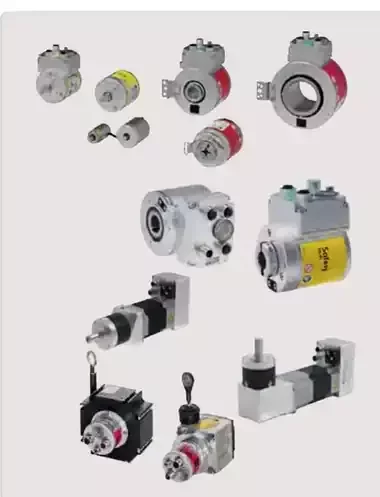
Port cranes, steel mill cranes, mine hoists and heavy lifting equipment in the Kingdom increasingly use electronic safety functions alongside mechanical protection. Encoders are often the weakest link if they are not chosen for safety duty.
Safety functions that use encoders
| Function | Purpose |
|---|---|
| Safe overspeed monitoring | Stops the hoist if it runs too fast |
| Safe position and end limits | Prevents overtravel at top and bottom |
| Safe speed limits in zones | Slows motion near people or obstacles |
| Brake and load holding checks | Detects slip of the load when it should be held |
What SIL and PL mean
SIL (IEC 61508 and IEC 62061) and PL (ISO 13849) express how reliable a safety function must be.
The required level comes from a risk assessment of the machine.
Each device in the function, including the encoder, contributes to the overall level.
Safety encoders come with certified data such as failure rates and diagnostic coverage.
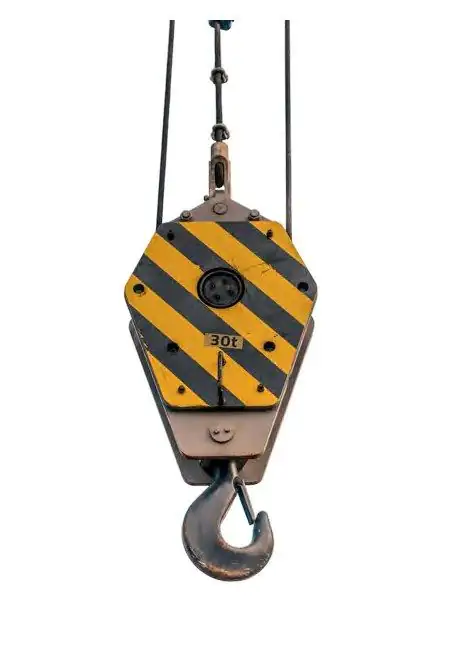
Design and maintenance tips
Use encoders certified for the required SIL or PL, with safety interfaces matched to the safety controller.
Avoid common-cause failures, for example by using diverse sensors or mechanical protection.
Secure mechanical couplings, because a slipping coupling can defeat the safety function.
Proof test safety functions at the intervals in the safety design.
Keep documentation of safety settings and changes.
TR Electronic from BTGC
TR Electronic of Germany makes rotary and linear encoders, including safety-rated encoders, and absolute positioning systems for heavy industry. BTGC is the TR Electronic partner in Saudi Arabia. See also absolute and incremental encoders, drives for cranes and hoists and the machinery handling page.
Questions buyers ask
Can a standard encoder be used in a safety function? Not by itself; the function needs devices with safety data and a design that meets the required level.
What is the difference between SIL and PL? They come from different standards but both express safety function reliability.
Does BTGC supply safety encoders? Yes, TR Electronic safety encoders with certificates.
Contact BTGC
Email info@btc-ksa.com or call +966 13 856 0528. Branches: Dammam, Jubail and Yanbu. Request a quote.