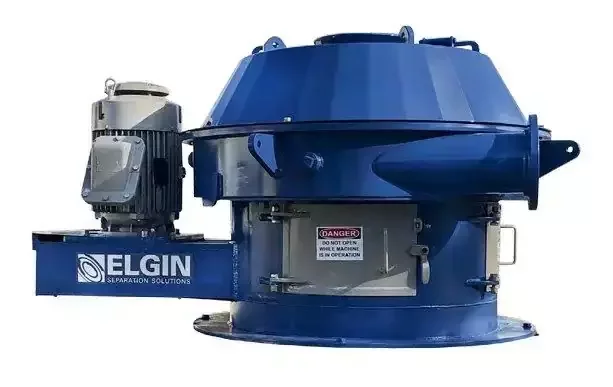
In short: sludge disposal is usually paid by weight or volume, and most of that weight is water. Dewatering equipment removes as much water as practical before the cake leaves site. Decanter centrifuges are compact, enclosed and continuous; belt presses use little energy but need more space and attention; filter presses give the driest cake in batches; screw presses run slowly with low wear. The right choice depends on the sludge, the required cake dryness, space, odour control and operating effort. BTGC supplies Elgin decanter centrifuges and dewatering equipment.
Industrial plants, refineries and municipal and industrial wastewater plants in the Kingdom produce biological sludge, oily sludge, chemical sludge from water treatment and mineral slurries. Hauling and treating wet sludge is expensive, and disposal rules increasingly favour dry, stable cake. Dewatering is the step that controls those costs.
How the main technologies compare
| Technology | Strengths | Limitations | Typical fit |
|---|---|---|---|
| Decanter centrifuge | Compact, enclosed (good odour control), continuous, handles variable feed | Higher power, scroll wear, skilled maintenance | Municipal and industrial sludge, oily sludge, sites with limited space |
| Belt filter press | Low power, simple principle | Larger footprint, open (odour, aerosols), wash water, belt maintenance | Larger plants with space and steady sludge |
| Filter press (plate and frame or membrane) | Driest cake, clear filtrate | Batch operation, cloth maintenance, labour or automation | Chemical and mineral sludges where dry cake matters most |
| Screw press | Low speed, low wear and power, quiet | Lower capacity per unit, sensitive to sludge type | Small to medium plants, biological sludge |
What decides cake dryness
Sludge type. Mineral and chemical sludges dewater more easily than biological sludge, which holds water inside cells.
Conditioning. Polymer type and dose make a large difference with every technology; trials with the actual sludge are essential.
Feed consistency. Steady feed solids and flow give better results than surges.
Machine settings. On centrifuges, bowl speed, differential speed and pond depth trade cake dryness against centrate clarity.

Choosing for a project
Characterise the sludge: solids content, organic fraction, particle size, oil content and variability.
Run bench and pilot tests with candidate technologies and polymers.
Compare whole-life cost: power, polymer, wash water, labour, maintenance and disposal of the resulting cake.
Consider odour, hazardous-area classification for oily sludge, and building space.
Centrifuges for oily and drilling waste
For refinery and drilling waste, enclosed decanter centrifuges, often three-phase, are usually preferred because they separate oil as well as water and keep vapours contained. See decanter centrifuges for oily sludge and, for keeping them running, decanter centrifuge maintenance.
Elgin from BTGC
Elgin Separation Solutions builds decanter centrifuges, dewatering and solids control equipment for industrial, municipal and drilling applications. BTGC is the Elgin partner in Saudi Arabia. See also the process and separation page.
Questions buyers ask
Which technology gives the driest cake? Filter presses, especially membrane presses, usually give the driest cake, but in batches and with more handling; centrifuges are often the best balance for continuous, enclosed operation.
Do we need polymer for a centrifuge? Most sludges need conditioning polymer; trials set the type and dose.
Can a centrifuge be trialled on our sludge? BTGC discusses trial options with Elgin based on the sludge data and the site.
Contact BTGC
Email info@btc-ksa.com or call +966 13 856 0528. Branches: Dammam, Jubail and Yanbu. Request a quote.