In short: compressor oil works harder in the Kingdom than in most places: high intake temperatures, dust, long running hours and, in process gas service, hydrocarbon or acid gases that dilute and attack the oil. The right oil depends on the compressor type and the gas. Synthetic oils based on PAO or PAG run cleaner and last longer in many duties, but they must be chosen for compatibility with the gas, the seals and any existing oil. BTGC supplies Royal Purple Synfilm and other synthetic compressor oils.
A rotary screw air compressor on a Jubail site may take in air at 45 °C, compress it with oil injection and run its discharge above 90 °C, all day, all year. In a refinery, a screw or reciprocating compressor on hydrocarbon gas has the extra problem that the gas dissolves into the oil and thins it. Each duty has a different failure mode, so the oil should be chosen for the duty, not by habit.
Duties and their oil problems
| Compressor and gas | Main oil problem | What helps |
|---|---|---|
| Oil-flooded rotary screw, air | Oxidation and varnish at high discharge temperature; short drain intervals in hot climates | Synthetic base oil with strong oxidation stability; clean coolers; good air filtration |
| Centrifugal, air or gas (bearings and gears) | Varnish on bearings and control valves; foaming and slow air release | High-quality turbine-type oil in the specified ISO VG grade; varnish monitoring |
| Screw or reciprocating, hydrocarbon gas | Gas dilution lowers viscosity; condensates wash oil off surfaces | Synthetics with low gas solubility, such as PAG for some gases, or a higher viscosity grade chosen with the compressor maker |
| Reciprocating cylinders | Deposits on valves and carbon in the discharge | Oils with low deposit tendency and the correct feed rate |
| Gas containing H2S or CO2 | Acid attack and reaction with additives | Oils approved for the gas, with careful additive selection |
Why synthetic oils last longer
Synthetic base oils such as polyalphaolefins (PAO), esters and polyalkylene glycols (PAG) resist oxidation better than conventional mineral oils, so they form less sludge and varnish at the same temperature and hold their viscosity longer. That usually allows longer drain intervals and cleaner coolers and separators. It does not remove the need for oil analysis: the drain interval should be set by the oil's condition, not by the label.

Watch compatibility
PAG oils do not mix with mineral oils or PAO; a change needs a full drain and flush, and seal and paint compatibility must be checked.
Ester-based oils can attack some seal materials and paints; check with the compressor maker.
Mixing brands or chemistries can cause additive drop-out, foaming or deposits.
Change air-oil separators and filters when converting oils, because old deposits loosen.
Oil analysis that pays for itself
Viscosity trend: falling viscosity in gas service shows dilution, rising viscosity shows oxidation.
Acid number and oxidation by infrared: rising values show the oil is ageing.
Varnish potential (MPC) on centrifugal and turbine-type systems, as explained in turbine oil varnish.
Water and particle counts: cooler leaks and filter failures show up here first.
Royal Purple from BTGC
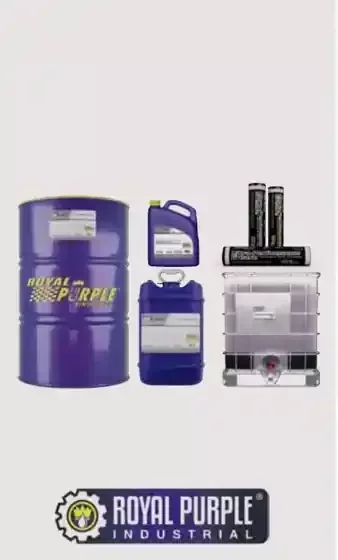
Royal Purple, part of Calumet, formulates synthetic industrial lubricants including the Synfilm range for compressors, turbines and blowers. BTGC is the Royal Purple industrial partner in Saudi Arabia, alongside Bel-Ray and Calumet. See also Synfilm GT in Jubail compressors and the rotating equipment and lubrication page.
Questions buyers ask
Can we switch our screw compressor to synthetic oil? Usually yes, with a drain, flush and new separator and filter; BTGC checks compatibility with the compressor maker's requirements and the current oil.
How long can synthetic compressor oil last? It depends on temperature, gas and contamination, and oil analysis should set the interval; synthetics commonly last several times longer than mineral oils in the same duty.
Which oil suits hydrocarbon gas compressors? It depends on the gas composition, pressure and compressor type; send the gas analysis and compressor details for a recommendation.
Contact BTGC
Email info@btc-ksa.com or call +966 13 856 0528. Branches: Dammam, Jubail and Yanbu. Request a quote.