In short: in a drive train of motor, coupling, gearbox and compressor, the shafts twist back and forth slightly as torque changes. If a torsional natural frequency of the train matches an excitation, such as compressor pulsations, motor start-up torque or drive harmonics, these twists grow and can crack shafts, break couplings or damage gear teeth, often with little warning on normal vibration probes. Torsional analysis at design and careful selection of couplings and drives prevent this. BTGC supplies RENK gear units and couplings.
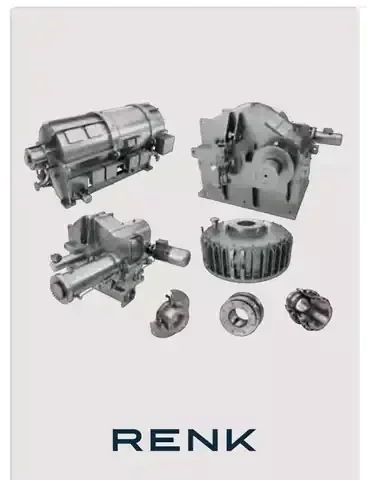
Large compressor and pump trains in Saudi gas plants, refineries and petrochemical complexes increasingly use variable speed drives and synchronous motors, both of which can introduce torsional excitations.
Common torsional excitations
| Source | Example |
|---|---|
| Synchronous motor start-up | Pulsating torque during acceleration |
| Variable speed drives | Torque harmonics at certain speeds |
| Reciprocating compressors | Cyclic torque every revolution |
| Electrical faults | Short circuits and fast reclosing |
| Gear mesh | Excitation from gear errors |
How torsional problems are prevented
Perform a torsional analysis of the complete train at design, including all operating speeds and start-up.
Tune natural frequencies with coupling stiffness and inertia so they avoid excitations.
Use couplings with suitable damping or torque limits where needed.
Program drives to avoid running at speeds near torsional resonances.
Follow API standards for train analysis on critical machines.

Warning signs in service
Coupling damage, such as worn gear teeth, broken disc packs or loose bolts.
Gear tooth pitting or fatigue cracks without obvious lubrication problems.
Shaft cracks at keyways or diameter changes.
Unusual noise at particular speeds.
Torsional measurements using strain gauges or speed fluctuation can confirm the problem.
RENK from BTGC
RENK of Germany makes high-performance gear units, slide bearings and couplings. BTGC is the RENK partner in Saudi Arabia. See also API 613 gear units, gear couplings, synchronous motors for compressors and the rotating equipment page.
Questions buyers ask
Why don't normal vibration probes see torsional vibration? They measure lateral movement; torsional vibration is twisting and needs different measurement.
Can a coupling change fix torsional problems? Often, by changing stiffness or adding damping to move natural frequencies.
Does BTGC support torsional studies? Yes, through RENK engineering for gear units and couplings.
Contact BTGC
Email info@btc-ksa.com or call +966 13 856 0528. Branches: Dammam, Jubail and Yanbu. Request a quote.