In short: aluminium flat products for cans, cars, buildings and packaging are made to very tight thickness and flatness tolerances. Hot and cold rolling mills and finishing lines therefore measure thickness, profile, flatness, width and surface quality continuously, and feed the results to the mill controls. Aluminium absorbs radiation differently from steel and varies with alloy, so gauges need suitable sources and alloy compensation. BTGC supplies IMS Messsysteme measuring systems.
The Kingdom produces aluminium sheet and can stock on a large scale, and downstream processors are growing. Measurement quality directly affects yield, customer claims and the ability to supply demanding markets.
What is measured and why
| Measurement | Purpose |
|---|---|
| Thickness (centreline and profile) | Automatic gauge control and product certification |
| Flatness | Shape control in the mill and leveling on finishing lines |
| Width and edge position | Trimming and coil quality |
| Surface inspection | Detect scratches, roll marks, inclusions and other defects |
| Temperature | Process control in hot rolling |
What is different about aluminium
Aluminium is less dense than steel, so X-ray gauges use lower energies and need careful calibration.
Alloy composition changes absorption, so alloy compensation tables must be correct for every alloy rolled.
Bright, reflective surfaces affect optical measurement and need suitable lighting and cameras.
Rolling oil and emulsion mist in the measuring gap must be kept away from windows with air purging.
Keeping measurement accurate
Standardise gauges with certified samples at set intervals and after maintenance.
Check alloy compensation whenever new alloys are introduced.
Keep cooling and purge air systems working; failures cause drift.
Compare gauge readings with offline measurements to confirm accuracy.
Follow radiation safety rules for licensing, interlocks and dosimetry.
IMS Messsysteme from BTGC
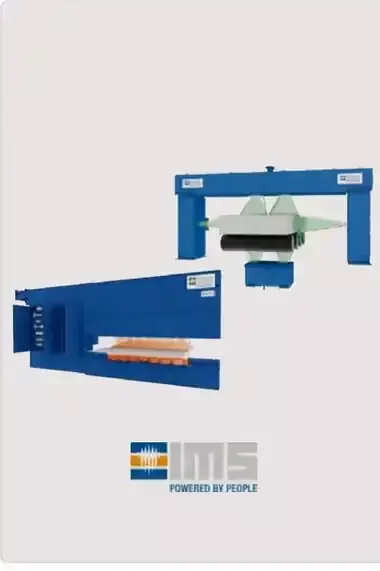
IMS Messsysteme of Germany supplies thickness, profile, flatness, width and surface measuring systems for steel and aluminium rolling mills and processing lines. BTGC is the IMS partner in Saudi Arabia. See also X-ray and isotope thickness gauges, position sensors for mill cylinders and the metal sector page.
Questions buyers ask
Can a steel thickness gauge measure aluminium? Only if its source and calibration suit aluminium; gauges are usually set up for the materials being rolled.
Why does alloy matter for thickness gauges? Different alloys absorb radiation differently, so the gauge must compensate for the alloy.
Does BTGC support existing IMS systems? Yes, with spare parts and service coordination.
Contact BTGC
Email info@btc-ksa.com or call +966 13 856 0528. Branches: Dammam, Jubail and Yanbu. Request a quote.