In short: a control valve is only as good as its response to the controller's signal. Packing friction, worn actuators, air leaks and a badly set-up positioner make valves stick, overshoot and hunt, and the control loop gets the blame. Smart digital positioners measure what the valve is actually doing and record diagnostic signatures that reveal these faults before they cause trips. BTGC supplies Motoyama control valves with positioners and supports diagnostics and repair at its Jubail service center.
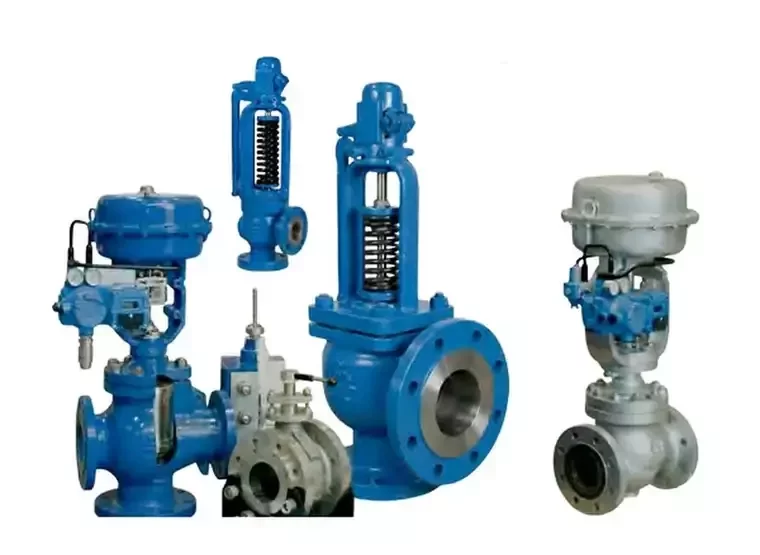
Control loop audits in process plants often find loops that perform poorly in automatic, and the final control element, the valve, is a frequent cause. The symptoms are familiar: a flow loop that cycles steadily, a level that never settles, a temperature that overshoots after every set-point change. Before retuning the controller, check the valve.
What a positioner does
A positioner compares the controller's signal, usually 4 to 20 mA with HART or a fieldbus signal, with the actual stem or shaft position and adjusts the air to the actuator until they agree. It overcomes packing friction and the process force on the plug, so the valve goes where it is told. A digital positioner also records travel, air pressures and how they change over time, which turns it into a diagnostic instrument.
Common valve faults and their signatures
| Fault | What operators see | What diagnostics show |
|---|---|---|
| High packing friction | Slow response, cycling in flow loops | Wide hysteresis between opening and closing on the valve signature; more actuator pressure needed to move |
| Stick-slip | Steady limit cycling around the set point | Position moves in jumps rather than smoothly on small signal changes |
| Deadband | Valve ignores small signal changes | No movement until the signal change passes a threshold |
| Actuator air leak or diaphragm failure | Valve drifts or cannot reach full travel | Air consumed without movement; pressure falls while holding position |
| Wrong bench set or spring range | Valve does not seat or does not fully open | Spring range on the signature differs from the data sheet |
| Seat or trim damage | Leakage when closed, poor control near closed | Changed seating profile at the end of travel |
Valve signatures and step tests
A valve signature is a slow full-stroke test that plots actuator pressure against travel. Comparing it with the signature taken at commissioning shows changes in friction, spring range and seating force. Small step tests, for example steps of 0.5 to 2 per cent, show deadband and response time, which matter more for control than full-stroke behaviour. Running both at turnarounds, and remotely through the asset management system between turnarounds, lets maintenance overhaul only the valves that need it.
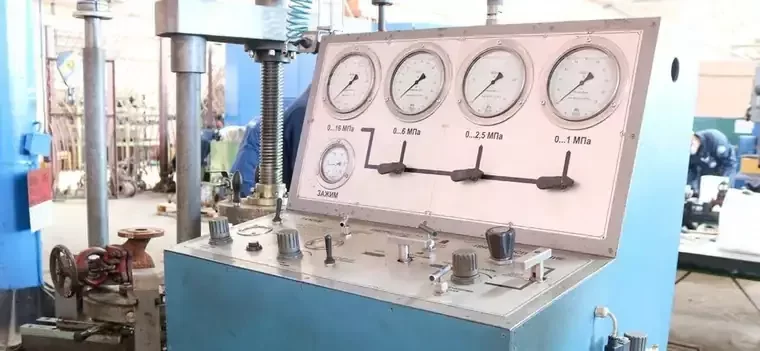
Partial stroke testing for ESD valves
Emergency shutdown valves sit fully open for months. A partial stroke test moves the valve a small amount, typically 10 to 20 per cent, and back, proving it is not stuck without stopping the process. It improves the probability that the valve works on demand, which is credited in the safety integrity calculation under IEC 61511, but it does not prove tight shut-off; full-stroke and leak tests are still needed at turnarounds.
Getting value from diagnostics
Record a baseline signature for every critical valve at commissioning or after overhaul.
Set alerts in the positioner for travel deviation, cycle counts and air supply pressure.
Review diagnostics before a turnaround to decide which valves to pull, rather than pulling every valve on a fixed list.
Combine diagnostics with sizing checks: a valve that always works near closed may be oversized, as explained in control valve sizing.
Motoyama from BTGC
Motoyama Eng. Works, Ltd. builds globe control valves with pneumatic actuators, as well as cryogenic, bellows-seal and safety relief valves. BTGC is the Motoyama partner in Saudi Arabia and repairs, calibrates and tests control valves at the BTGC service center in Jubail. See also control valve cavitation and the flow control and valves page.
Questions buyers ask
Can a smart positioner be fitted to an older valve? Usually yes, with a mounting kit and feedback linkage for the actuator; BTGC checks the actuator type and travel first.
Do diagnostics replace valve overhauls? No, they target them. Diagnostics show which valves need work and which can stay in service.
How often should ESD valves be partial stroke tested? As set by the safety study; intervals of weeks to months are common, with full-stroke testing at turnarounds.
Contact the BTGC valve team
Email valves@btc-ksa.com or call +966 13 856 0528. Branches: Dammam, Jubail and Yanbu. Request a quote.