In short: most control valve problems in Saudi plants start on the data sheet, not in the field. A valve sized with too much margin runs nearly closed, hunts and wears its seat; one sized too small cannot pass the flow at an upset. Good sizing uses real minimum, normal and maximum conditions, checks choked flow and noise, and picks the trim characteristic to match how the pressure drop behaves. BTGC sizes and supplies Motoyama globe control valves.
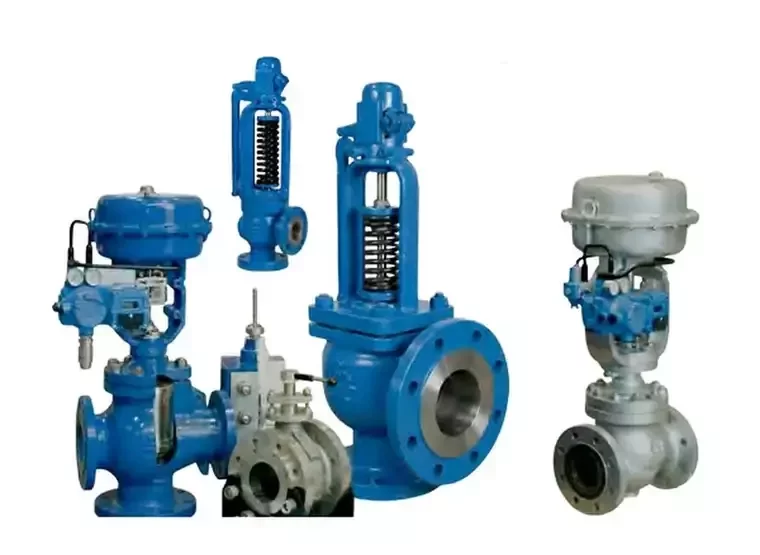
Ask an instrument technician which control valves give trouble and the answer is usually the same short list: the one that sits at 8 per cent open and bangs on its seat, the one that is wide open at summer peak and still cannot hold the level, and the one that screams at the letdown station. All three are sizing problems. The body, actuator and positioner may be excellent; the numbers they were selected on were wrong.
What Cv actually means
The flow coefficient Cv is the flow of water in US gallons per minute that passes through the valve with a pressure drop of 1 psi. The metric equivalent Kv is the flow in cubic metres per hour at 1 bar, and Kv is about 0.865 times Cv. The sizing equations in IEC 60534-2-1 and ANSI/ISA-75.01.01 turn the process data (flow, inlet pressure, pressure drop, density or molecular weight, vapour pressure and viscosity) into a required Cv at each operating point. The valve is then chosen so that every required Cv falls inside its useful travel.
The three operating points that matter
| Case | Why it matters | Typical target |
|---|---|---|
| Minimum flow | Start-up, turndown and low-rate operation; the valve must still control without sitting on the seat | Not below about 10 to 20 per cent travel |
| Normal flow | Where the valve spends most of its life; it sets wear, noise and control quality | Around 50 to 70 per cent travel |
| Maximum flow | Upset or design rate; the valve must pass it with margin left | Not above about 80 to 90 per cent travel |
These ranges are rules of thumb rather than standards, but they catch most bad selections. If one valve cannot meet both minimum and maximum, the answer is a split-range pair, a reduced trim in a larger body or a different valve type, not a bigger safety factor.
Where oversizing comes from
Stacked margins. Process adds 10 per cent to the flow, piping adds margin to the pressure drop, instrumentation adds a factor to Cv, and the vendor rounds up to the next size. The result can be a valve two sizes too large.
Line-size habit. Selecting the valve at line size without checking Cv. Most control valves are one or two sizes smaller than the line, with reducers either side, which the sizing equations allow for through the piping geometry factor.
Wrong pressure drop. Using a guessed drop instead of the drop available at each flow. In pumped systems the drop across the valve falls as flow rises, so the valve opens much further at maximum flow than a constant-drop calculation suggests.
Equal percentage or linear?
The trim characteristic describes how Cv changes with travel. With an equal percentage trim each increment of travel changes the flow by the same percentage of the current flow; with a linear trim each increment adds the same amount of Cv. What matters in practice is the installed characteristic, the response the valve shows inside the real system with pumps, pipes and exchangers around it.
| Situation | Usual choice | Reason |
|---|---|---|
| Pumped or long-pipe systems where the valve takes a small share of the total pressure drop | Equal percentage | Compensates for the valve drop falling as flow rises, giving a near-linear installed response |
| Valve takes most of the system drop (pressure letdown, level control with constant head) | Linear | The drop stays roughly constant, so a linear trim already gives a linear installed response |
| Compressor anti-surge and fast-acting services | Linear or modified | Fast, predictable response near the surge line |
| Wide range from start-up to full rate | Equal percentage | Better resolution at low flow |
Choked flow, cavitation and noise
Liquids choke when the pressure inside the valve drops to the vapour pressure: flow stops rising however far the valve opens, and the vapour bubbles collapse downstream as cavitation. The liquid pressure recovery factor FL of the chosen trim decides how close to that point the valve operates. Gases choke at a limiting pressure ratio set by the factor xT. Both must be checked at every case, along with predicted noise to IEC 60534-8; many plants require a low-noise trim when the prediction exceeds about 85 dBA at 1 m. See control valve cavitation for the trim options in liquid service.
Data to send with a control valve enquiry
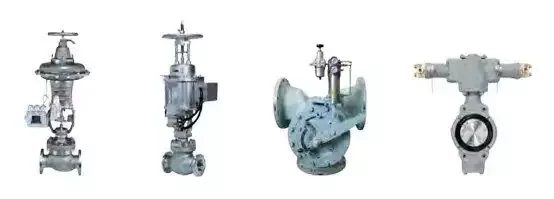
Fluid and phase at each case, with density or molecular weight, vapour pressure and viscosity.
Minimum, normal and maximum flow, each with its own inlet pressure and pressure drop.
Line size, schedule and material, and the piping arrangement either side of the valve.
Shut-off class (ANSI/FCI 70-2), fail position, actuator air supply and the control signal.
Allowable noise, hazardous-area classification and the end-user specification, such as Saudi Aramco or SABIC standards.
Motoyama control valves from BTGC
Motoyama Eng. Works, Ltd. builds globe control valves, bellows-seal and cryogenic designs, and safety relief valves for process plants. BTGC is the Motoyama partner in Saudi Arabia, sizing valves against the client's data sheets, supplying spare trims and supporting calibration and repair at the BTGC service center in Jubail. See also cryogenic valves for LNG and ethylene, safety relief valve testing and the flow control and valves page.
Questions buyers ask
Can an oversized valve be fixed without changing the body? Often yes: a reduced-capacity trim in the same body brings the operating range back into the middle of the travel. BTGC checks whether the body and actuator suit the new trim.
How much margin should be added to Cv? Margin belongs in honest process data, not stacked on top of the calculation. Size on real minimum, normal and maximum cases and check the travel at each.
Do you size valves to client specifications? Yes. Sizing follows IEC 60534 or ISA-75 and the end-user specification named on the data sheet, and the calculation sheet is supplied with the offer.
Contact the BTGC valve team
Email valves@btc-ksa.com or call +966 13 856 0528. Branches: Dammam, Jubail and Yanbu. Request a quote.