In short: an overhead crane can only run straight if its runway is straight. Rails that are out of span, out of line or out of level make the crane skew, wear wheel flanges and rails quickly and load the structure unevenly. Crane standards such as CMAA 70 and ISO 12488-1 set tolerances for runways, and a periodic survey shows whether a runway still meets them. BTGC supplies Gosan crane wheels and components and advises on wheel and rail wear.
Crane wheels and rails wear as a pair. Many plants replace wheels again and again without checking the runway, and the new wheels wear at the same rate as the old ones. In steel plants, ports and large workshops in the Kingdom, heavy duty cycles and building settlement make runway problems common.
What the runway must get right
| Parameter | What happens when it is out of tolerance |
|---|---|
| Span (distance between rails) | Wheel flanges bind on one or both rails; high lateral forces on the structure |
| Straightness of each rail | The crane snakes along the runway; flange wear at specific locations |
| Elevation and level | Uneven wheel loads, tilting and skewing |
| Rail-to-rail height difference | The crane runs crooked; wheel loads are unequal |
| Rail joints | Impact loads on wheels and structure; cracked rails and clips |
| Rail clips and pads | Rails move sideways; noise and wear |
CMAA 70 for overhead travelling cranes and ISO 12488-1 set tolerances for these parameters; the crane maker's own figures apply where they are tighter.
Surveying a runway
Use a laser tracker or total station to measure both rails along their full length at regular intervals.
Plot span, straightness, elevation and rail-to-rail height and compare them with the tolerances.
Inspect rail head wear and profile, joints, clips, pads and the supporting girders.
Compare the survey with wheel wear patterns, which often show exactly where the runway is out.
Rail wear and replacement
Rails wear on the head and sides. Replacement is due when head wear reaches the limit set by the crane maker or plant standard, or when the profile no longer suits the wheel tread. Wheel hardness should be matched to the rail so wear is shared sensibly between the two, as discussed in crane wheel wear.
Correcting the runway
Realign rails with adjustable clips and shims to bring span and straightness back within tolerance.
Correct elevation with shims or grout under the rail or girder seats.
Repair or replace joints, and weld or clip rails according to the design.
After correction, check crane skewing and wheel alignment so crane and runway work together.
Gosan from BTGC
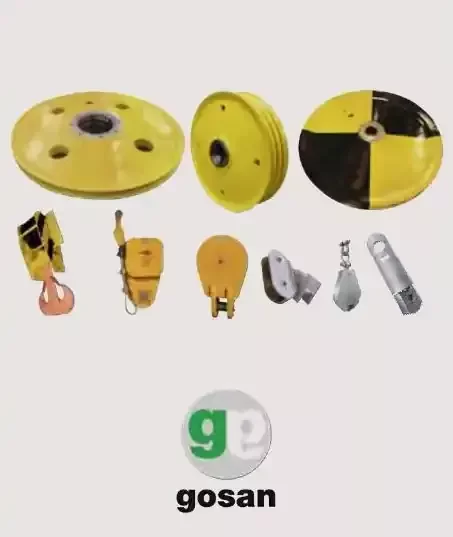
Gosan manufactures forged crane wheels, sheaves, hook blocks and hooks. BTGC is the Gosan partner in Saudi Arabia. See also crane duty classification and the mining and material handling page.
Questions buyers ask
How often should a runway be surveyed? At commissioning, after structural changes or heavy incidents, and periodically based on duty, often every few years for heavy-duty cranes.
Can wheel wear tell us the runway is out? Yes. Flange wear concentrated on one side or one corner of the crane usually points to runway span or alignment problems.
Does Gosan supply rails? Gosan supplies wheels, sheaves and hooks; BTGC can advise on matching wheel material and hardness to the existing rails.
Contact BTGC
Email info@btc-ksa.com or call +966 13 856 0528. Branches: Dammam, Jubail and Yanbu. Request a quote.