In short: fouling is the slow loss of heat transfer as deposits build up on tube surfaces: scale and biofilm on the cooling water side, and coke, polymer, wax or salts on the process side. It raises energy use, limits throughput and eventually forces an unplanned cleaning. Tracking the overall heat transfer coefficient from plant data shows when cleaning pays, and the right cleaning method protects the tubes. BTGC supplies Hemaco heat exchangers and replacement bundles designed for cleanability.
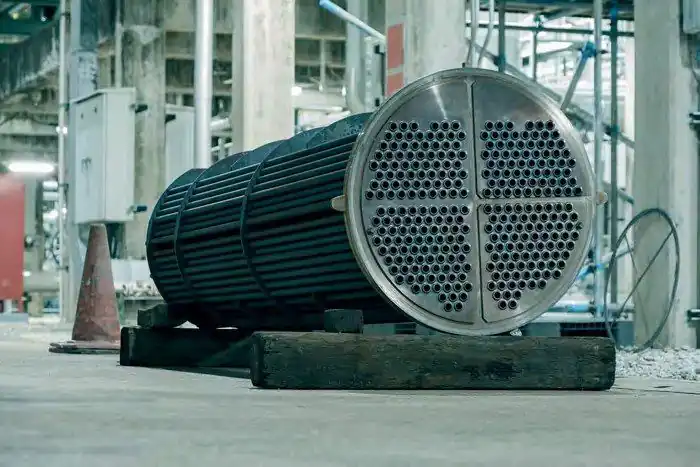
In refinery preheat trains, petrochemical coolers and utility condensers, the design allowed for fouling through a fouling resistance and some extra surface. Once deposits exceed that allowance, the exchanger can no longer meet its duty. In crude preheat trains, lost heat recovery means more fuel at the furnace; in coolers, warmer product limits rates in summer.
Types of fouling
| Type | Where it happens | Typical deposit |
|---|---|---|
| Scaling (crystallisation) | Cooling water side, hot tube walls | Calcium carbonate, calcium sulphate, silica |
| Biological | Cooling water and seawater | Biofilm, slime, marine growth |
| Particulate | Dirty water and slurries | Silt, sand, corrosion products |
| Chemical reaction | Hot hydrocarbon streams | Coke, polymers, asphaltenes |
| Corrosion | Wherever material and fluid are mismatched | Oxide layers and pitting debris |
| Wax | Cold crude and heavy oils | Wax and paraffin deposits |
Track fouling from plant data
The overall heat transfer coefficient U can be calculated from flows and inlet and outlet temperatures that most plants already measure. Plotting U, or the fouling resistance derived from it, against time shows the fouling rate. Rising pressure drop on the tube side shows deposits narrowing the tubes. Together they let the plant schedule cleaning when the cost of lost duty exceeds the cost of cleaning, instead of waiting for a limit to be hit.
Cleaning methods
| Method | Best for | Watch out for |
|---|---|---|
| High-pressure water jetting | Tube bores and the shell side of removable bundles; hard and soft deposits | Correct pressure and nozzle for the tube material and deposit; safe work procedures |
| Chemical cleaning by circulation | Scale and deposits that cannot be jetted, or cleaning in place | Inhibited chemicals compatible with all the metals; neutralisation and waste handling |
| Mechanical tube cleaners (brushes, scrapers, projectiles) | Straight tubes with soft to medium deposits | Correct sizing so tubes are not scored |
| Online cleaning systems (balls or brushes) | Condensers and coolers on seawater or cooling water | Ball recovery and screen maintenance |
Design for less fouling and easier cleaning
Keep tube-side velocity high enough to limit deposits in water service, typically above about 1 m/s, without exceeding the erosion limit of the tube material.
Put the fouling fluid on the tube side, where it can be cleaned mechanically.
Use removable bundles, square pitch layouts and cleaning lanes where shell-side fouling is expected.
Avoid excessive surface margin, which lowers velocity and can increase fouling.
Choose materials that resist the corrosion that seeds fouling, as covered in exchangers in special alloys.
Hemaco from BTGC
Hemaco designs and fabricates shell and tube heat exchangers, air coolers and pressure vessels to ASME and TEMA, including replacement bundles built for cleaner operation. BTGC is the Hemaco partner in Saudi Arabia. See also retubing or replacing an exchanger and the petrochemicals sector page.
Questions buyers ask
How often should an exchanger be cleaned? When monitoring shows the cost of lost duty or extra pressure drop exceeds the cost of cleaning; a fixed interval is a starting point, not the answer.
Can a fouling-prone exchanger be redesigned? Yes. A new bundle can change tube size, pitch, baffles and passes to raise velocity and improve cleanability; BTGC needs the operating data and fouling history.
Is chemical cleaning safe for our tubes? With inhibited chemicals selected for the tube material and controlled temperature and time, yes; the cleaning contractor should confirm compatibility in writing.
Contact BTGC
Email info@btc-ksa.com or call +966 13 856 0528. Branches: Dammam, Jubail and Yanbu. Request a quote.