In short: portable dewatering pumps on construction and mining sites, sump pumps in process units and submersible pumps in water and wastewater stations are moved, swapped and repaired far more often than fixed motors, and each change is an electrical disconnection and reconnection. Switch-rated plugs and sockets let a trained operator swap a pump safely in minutes, keep the correct phase rotation, and isolate the pump for work without opening a panel. BTGC supplies Marechal Electric DECONTACTOR plugs and sockets for pump connections.
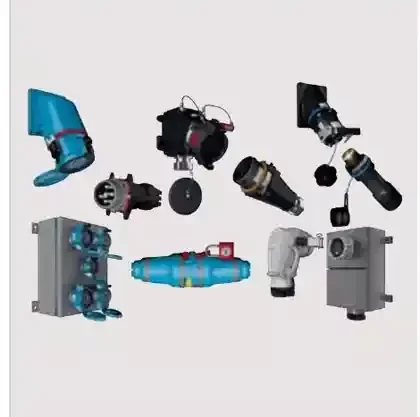
In the Kingdom, pumps handle seawater intakes, desalination brine, sewage and storm water, mine dewatering, tank farm sumps and process drains. Many are duty and standby pairs that are rotated for maintenance, and portable pumps move around a site as work progresses. Hard-wired connections make every move a job for an electrician, and every reconnection a chance for error.
What goes wrong with hard-wired pump connections
Reversed phase rotation after reconnection, which runs the pump backwards and can damage seals and impellers.
Loose terminations in junction boxes exposed to moisture and heat.
Long delays waiting for an electrician to disconnect a failed pump.
Temporary, unsafe cable joints used to get a portable pump running quickly.
Why plug-in connections suit pumps
| Requirement | How a switch-rated plug meets it |
|---|---|
| Fast swaps | The pump arrives with its plug fitted; disconnection and reconnection take minutes |
| Correct phase rotation | Keyed multi-pole plugs keep the phase sequence fixed once the socket is wired correctly |
| Safe isolation | Withdrawing the plug visibly isolates the pump, and switch-rated designs cannot be withdrawn under load |
| Wet and dusty locations | High IP ratings for outdoor, wash-down and pit locations, as explained in IP ratings |
| Hazardous areas | Certified versions for zoned areas, see hazardous-area plugs and sockets |
Practical design points
Mount the socket above flood level, with the pump cable long enough to reach without strain.
Rate the plug and socket for the motor's full-load current and starting duty, derated for ambient temperature.
Bring the pump's protection and control signals, such as thermal and moisture sensors, through the plug's auxiliary contacts or a separate control connector.
Standardise on one or two plug sizes across the site, so any pump fits any station of the same rating.
Provide cable support and strain relief, especially for submersible pump cables lifted with the pump.
For water and wastewater stations
Duty and standby submersible pumps can each have their own socket at the top of the wet well. When a pump is lifted for maintenance, the operator unplugs it, isolates it and lifts it without entering the electrical room. The same arrangement suits seawater intake pumps and brine transfer pumps at desalination plants; related intake equipment is covered in passive intake screens.
Marechal Electric from BTGC
Marechal Electric makes DECONTACTOR switch-rated plugs and sockets for industrial, outdoor and hazardous areas. BTGC is the Marechal Electric partner in Saudi Arabia. See also switch-rated plugs for motor disconnection and the electrical power systems page.
Questions buyers ask
Can submersible pump cables be fitted with plugs? Yes. The plug is fitted to the pump cable end, with the gland and strain relief matched to the cable size.
Is a plug an acceptable isolation point for pump maintenance? Switch-rated plugs give visible isolation when withdrawn and can be locked; the site's isolation procedure decides how they are used.
Can one plug carry motor power and sensor signals? Some designs include auxiliary contacts; otherwise a separate control connector carries the sensor signals.
Contact the BTGC power division
Email power@btc-ksa.com or call +966 13 856 0528. Branches: Dammam, Jubail and Yanbu. Request a quote.