In short: an actuator that is too small stalls on a cold start or after a long shutdown; one that is far too large can break a shaft or crush a seat. Correct sizing starts from the valve maker's torque at the real pressure and service, adds a safety factor that reflects how the valve is used, and checks the air supply or voltage at its worst. BTGC supplies KSB valves with manual, pneumatic and electric actuation and checks actuator sizing against the client's data.
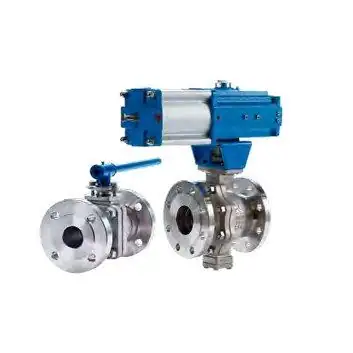
Quarter-turn valves (butterfly, ball and plug) open and close with a 90-degree turn, so the actuator delivers torque rather than thrust. The torque a valve needs is not constant through the stroke, and it changes with pressure, temperature, the fluid and how long the valve has stood still. Sizing an actuator means matching the actuator's torque curve to the valve's torque demand at every point of the stroke, with margin.
The torques a valve needs
| Torque | When it occurs | What drives it |
|---|---|---|
| Breakaway (break-to-open) | First movement from closed | Seat interference, differential pressure across the disc or ball, packing friction, sticking after long standstill |
| Running | Mid-stroke | Bearing and packing friction |
| Dynamic (hydrodynamic) | Part-open with flow, mainly butterfly valves | Flow acting on the disc; it can peak at around 70 to 80 degrees open and may tend to close the valve |
| End to close (seating) | Last few degrees before closed | Compressing the seat to reach the shut-off class |
Safety factors
The valve maker's published torque is usually for clean service at the stated differential pressure. Plants add a safety factor to cover dirty or sticky media, infrequent operation, temperature and ageing. Values used in practice range from about 1.25 for clean liquids on regularly operated valves to 1.5 or more for slurries, dry gas, viscous or crystallising fluids, and emergency shutdown valves that may sit still for months. The client specification normally sets the minimum, and Saudi oil, gas and petrochemical specifications state required margins for ESD and on-off valves.
Spring-return actuators: check both ends of the stroke
A spring-return (fail-safe) pneumatic actuator produces different torque at each end of its stroke. On the air stroke the available torque is air torque minus the spring force, which grows as the spring compresses; on the spring stroke the torque falls as the spring extends. Both strokes must exceed the valve's demand at the corresponding positions, and the air stroke must be checked at the minimum guaranteed supply pressure, not the nominal header pressure.
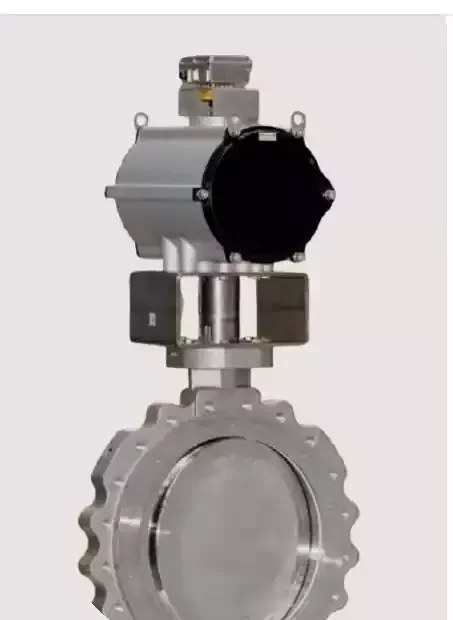
Electric actuators
Size on the highest valve torque with the safety factor, then set the torque switches to protect the valve.
Check the gearbox output and the ISO 5211 mounting flange and drive against the valve shaft.
Confirm duty class (on-off or modulating), starts per hour and the operating time the process needs.
For hazardous areas, confirm certification for the zone and gas group, and the ambient rating for Saudi summer temperatures.
Stroke time and ESD valves
Emergency shutdown valves must close within a specified time set by the safety study. Very fast closing on liquid lines causes surge, so closing time is a balance agreed with the process engineer, as discussed in water hammer and surge. Partial stroke testing is commonly specified to prove that an ESD valve will move without fully closing the line.
Common sizing mistakes
Using catalogue torque at zero differential pressure for a valve that must open against full line pressure.
Forgetting that a butterfly valve's dynamic torque can exceed its seating torque in high-velocity service.
Sizing at nominal air pressure when the instrument air header drops during plant upsets.
Oversizing so much that a jammed valve breaks its shaft instead of the actuator stalling.
KSB valves from BTGC
KSB supplies butterfly, globe and gate valves for industry, water and power, with manual, pneumatic and electric actuation. BTGC is a KSB partner in Saudi Arabia for industrial valves. See also concentric, double-offset and triple-offset butterfly valves, bellows-seal valves and the flow control and valves page.
Questions buyers ask
Can we fit a new actuator to an existing valve? Yes, with a mounting kit to ISO 5211; BTGC needs the valve make, size, pressure class, service and any torque data from the valve maker.
What information do you need for actuator sizing? Valve type, size, class, seat material, maximum differential pressure for opening and closing, fluid, operating frequency, fail position, air or power supply range and the required stroke time.
Should the actuator be sized with a large margin to be safe? No. Excess torque can damage the valve if it jams. The margin should reflect the service, and torque limits should protect the valve.
Contact the BTGC valve team
Email valves@btc-ksa.com or call +966 13 856 0528. Branches: Dammam, Jubail and Yanbu. Request a quote.