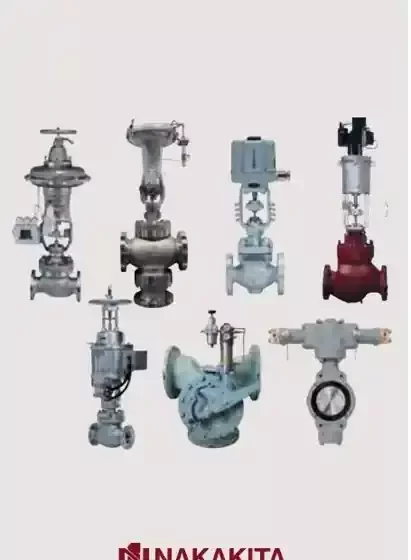
In short: a butterfly valve is light, compact and economical in large sizes, but the three main designs behave very differently. Concentric valves with a rubber liner suit water at low pressure; double-offset (high-performance) valves handle higher pressure and process service with soft or metal seats; triple-offset valves give metal-to-metal tight shut-off at high temperature. BTGC supplies Nakakita butterfly valves, in sizes up to 3,000 mm, for Saudi utilities, power plants and industry.
Butterfly valves now replace gate valves on many lines where weight, space and cost matter: cooling water headers, seawater intakes, firewater rings, steam and condensate, and hydrocarbon isolation. The question is no longer whether to use a butterfly valve but which kind. The word offset describes where the shaft and the sealing surfaces sit relative to each other, and each offset solves a specific problem.
Three designs, three sealing principles
| Design | Geometry | Seat | Typical use |
|---|---|---|---|
| Concentric (zero offset) | Shaft passes through the centre of the disc and the seat | Rubber liner (EPDM, NBR) or PTFE; the disc squeezes into the liner over the last part of the stroke | Water, cooling water, seawater, HVAC, low pressure |
| Double offset (high performance) | Shaft behind the seal face and off the pipe centreline, so the disc cams away from the seat as it opens | Soft (PTFE, RTFE) or metal seat; contact only near closure | Process service up to Class 600, steam, hydrocarbons, control duty |
| Triple offset | A third, angular offset makes the sealing surface a cone, so disc and seat meet only at the closed position without rubbing | Metal, or laminated metal and graphite seal ring | High temperature, fire-safe isolation, steam, tight shut-off on critical lines |
Why the offsets matter
In a concentric valve the disc edge rubs the liner over the last 15 to 20 degrees of travel every time it closes. That gives bubble-tight shut-off at low pressure but limits pressure, temperature and abrasive service, because the liner wears and takes a set. The first two offsets in a double-offset valve lift the disc off the seat almost as soon as it starts to open, cutting wear and torque. The third offset in a triple-offset valve removes rubbing altogether, which is why it can use a metal seat and still seal tightly at temperatures where elastomers and PTFE cannot survive.
Choosing for the service
Seawater and cooling water. Concentric valves with a suitable liner and a duplex, super duplex or coated disc are the usual answer; large intake valves need careful torque and actuator sizing. See seawater butterfly valves for desalination.
Steam and condensate. Double-offset metal-seated or triple-offset valves, chosen for temperature and shut-off class.
Hydrocarbons and fire-safe isolation. Triple-offset or fire-tested double-offset designs, certified to the fire test standard named in the specification, as explained in fire-safe and low-emission valves.
Throttling. Butterfly valves control best between about 20 and 70 degrees open; for wide rangeability a globe control valve is often the better tool.
Torque, actuators and seat leakage
Butterfly valve torque has three parts: seating and unseating torque, bearing friction, and hydrodynamic torque from the flow acting on the disc, which peaks part-open and can change direction. Concentric valves need high seating torque because of liner interference; triple-offset valves need torque to compress the seal at closure, which is why they are torque-seated rather than position-seated. Actuators are sized on the highest of these values with a safety factor, as covered in actuator sizing for quarter-turn valves. Shut-off is stated as an ANSI/FCI 70-2 class or API 598 leakage rate, and butterfly valves for cooling water covers liner and disc materials in more detail.
Remote operation and large sizes
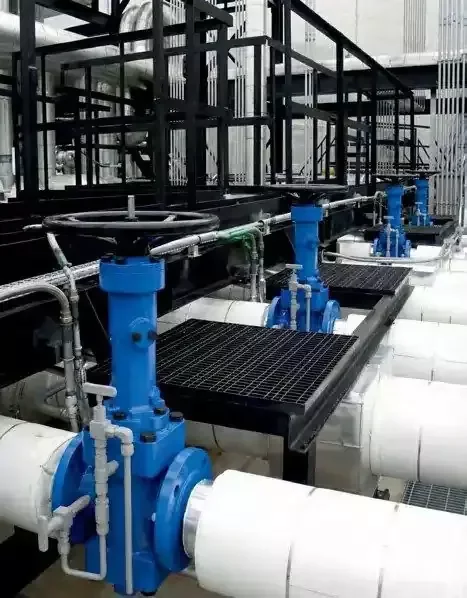
Large butterfly valves on cooling water, ballast and tank farm lines are often operated remotely. Nakakita builds hydraulic and pneumatic remote control systems alongside its valves, as described in remote valve control for tank farms.
Nakakita from BTGC
Nakakita Seisakusho manufactures butterfly valves up to 3,000 mm, automatic control valves, safety valves and remote control systems for power plants, ships and industry. BTGC is the Nakakita partner in Saudi Arabia. For triple-offset valves in refinery service BTGC also represents Krombach through Crane ChemPharma & Energy. See the flow control and valves page.
Questions buyers ask
Can a triple-offset valve be used for control? Within limits. It is mainly an isolation valve, and BTGC checks the required range before recommending it for throttling.
Is a triple-offset valve bidirectional? Most designs seal in both directions, but the rated shut-off can differ between the preferred and non-preferred direction; the data sheet states both.
Why does a concentric valve leak after a few years? Usually liner wear or compression set, or a disc edge damaged by debris. Replacing the liner restores shut-off if the disc and shaft are sound.
Contact the BTGC valve team
Email valves@btc-ksa.com or call +966 13 856 0528. Branches: Dammam, Jubail and Yanbu. Request a quote.