In short: gauge control, mill setup models and strip tension loops all trust the numbers from the load cells under the rolls. When those numbers drift, the mill corrects in the wrong direction: off-gauge heads and tails, poor flatness, strip breaks and mill stretch errors. Routine checks of zero, side-to-side balance and cabling, and a full calibration at planned shutdowns, keep the measurements honest. BTGC supplies Kelk roll force and tension systems and supports calibration for Saudi steel and aluminium mills.
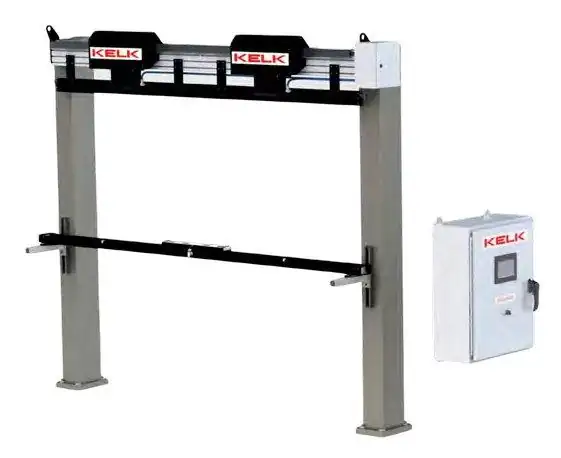
Roll force load cells sit in one of the harshest places in a plant: under the screwdown or hydraulic cylinder, carrying millions of load cycles, flooded with roll coolant, emulsion or scale, and exposed to heat from the strip. Tensiometer load cells under deflector rolls face similar conditions. They are built for it, but no measurement stays accurate for ever without checks.
Why mill measurements drift
| Cause | Effect on the reading |
|---|---|
| Water or coolant in the cell or connector | Unstable zero, noise, insulation faults |
| Damaged or crushed cables | Intermittent signals, offset changes |
| Uneven seating or a distorted bearing block | Load shared unevenly; wrong force reading on one side |
| Overload or impact from cobbles and strip breaks | Permanent zero shift |
| Temperature changes | Zero drift if the cell or electronics are not compensated |
| Electronics ageing | Gain and offset errors in the amplifier or transmitter |
Routine checks between shutdowns
Zero check. Record the reading with the mill open and unloaded at the same point in every shift or roll change, and trend it: a slow change shows a developing fault.
Side-to-side comparison. Operator side and drive side cells should read alike on a centred, flat strip. A growing difference points to a cell, cable or mechanical problem.
Cross-check against hydraulics. On hydraulic gap control mills, compare load cell force with the force calculated from cylinder pressure; a divergence flags one of the two.
Insulation and cable tests. Measure insulation resistance of cells and cables at roll changes and inspect cable routes for damage.
Calibration at planned shutdowns
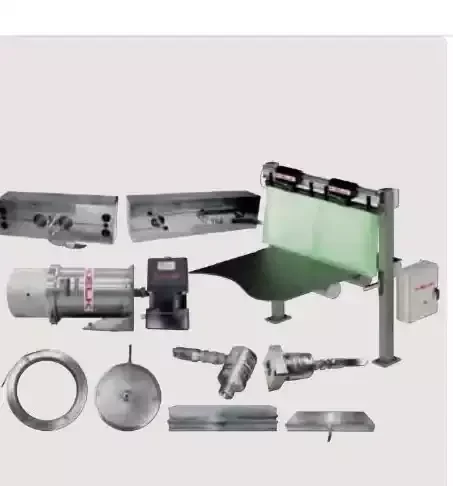
Roll force systems are calibrated with a reference load in the mill window, typically a calibrated reference load cell or calibration jack placed in the stand, with the mill's own cylinders applying load in steps up to the working range and back down. Each step is compared and the gain is set. Tensiometers are calibrated with known weights hung on a sling over the roll at the design wrap angle, or with a calibrated force applied along the strip path. The records, with zero and span before and after, are the evidence the quality system needs.
Mill stretch and gauge control
Load cell force also feeds the mill stretch calculation: the stand stretches in proportion to force, and the gauge control system uses that to correct the roll gap. A force error of a few per cent becomes a thickness error the gauge meter cannot see. That is why roll force calibration belongs in the commissioning of any new gauge control model, together with the speed measurement described in laser velocimeters.
Spares and repair
Keep at least one spare cell for each critical position, stored dry with protective caps.
Replace connectors and cable sections with the manufacturer's parts to keep sealing and shielding intact.
Send suspect cells for test and recalibration rather than re-zeroing them in the mill and hiding a fault.
Kelk from BTGC
Kelk, part of Vishay Precision Group, builds ROLLMAX roll force systems, TENSIOMETER strip tension systems, laser velocimeters and other measurement equipment for rolling mills. BTGC is the Kelk partner in Saudi Arabia. See also roll force load cells, strip tension measurement and the metals and steel sector page.
Questions buyers ask
How often should roll force cells be calibrated? Typically at each major shutdown, with zero and side-to-side checks every shift or roll change; the trend decides whether more frequent calibration is needed.
Can a cell damaged by a cobble be repaired? It must be tested first; a permanent zero shift or an insulation fault usually means replacement or factory repair.
Can BTGC support a calibration during our shutdown? Yes. BTGC coordinates calibration equipment and support with Kelk; book early so it fits the shutdown plan.
Contact BTGC
Email info@btc-ksa.com or call +966 13 856 0528. Branches: Dammam, Jubail and Yanbu. Request a quote.