In short: screens decide how much work a crusher does and whether the product meets size. Scalping ahead of a crusher removes material that is already fine enough, cutting wear, power and fines; sizing screens after it return oversize for another pass and split product grades. Screen type, deck angle, opening size and screen media must suit the material, especially when it is wet, sticky or abrasive. BTGC supplies TerraSource Global crushing, feeding and screening equipment.
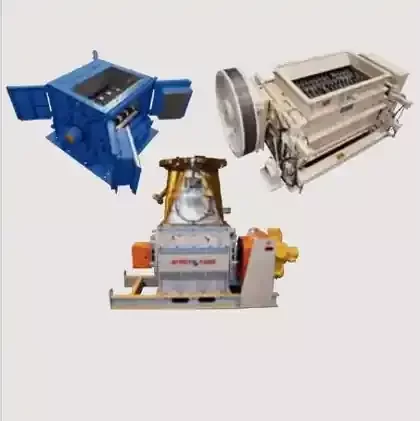
In cement, mining, aggregates, coal and fuel handling, many crushers in the Kingdom receive feed that already contains a large share of fine material. Every tonne of fines sent through a crusher costs power and wear and produces more dust and more fines. Screens placed correctly around the crusher fix that.
Where screens go
| Position | Purpose |
|---|---|
| Scalping before the primary crusher (often a grizzly or vibrating grizzly feeder) | Bypass fines around the crusher and protect it from overfeeding |
| Between crushing stages | Remove finished product so the next crusher only sees oversize |
| After final crushing (closed circuit) | Return oversize to the crusher and guarantee product top size |
| Product sizing | Split product into grades for sale or for different users |
Screen types
Inclined vibrating screens: the most common type for dry, free-flowing material.
Horizontal and multi-slope (banana) screens: high capacity for large tonnages and fine separations.
Grizzlies and grizzly feeders: heavy bars for scalping large lumps.
Roll or disc screens: rotating discs or rolls that handle sticky, wet or fibrous material that blinds vibrating decks, common for coal, biomass and alternative fuels.
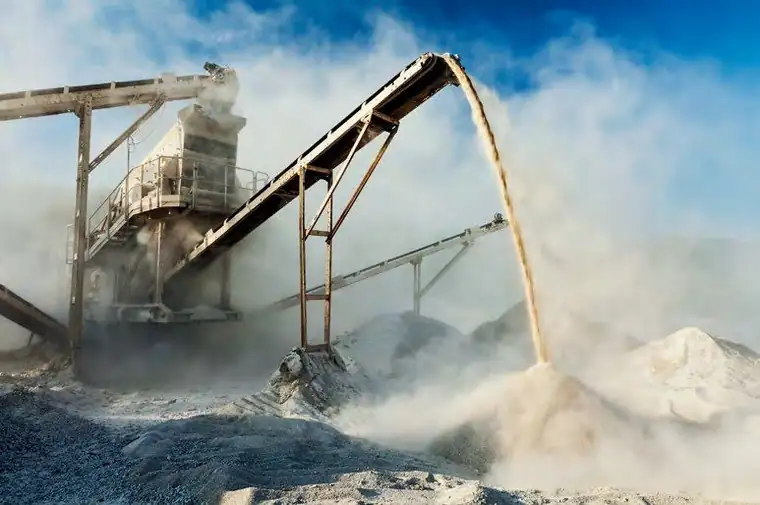
Common screening problems
| Problem | Typical cause | Fix |
|---|---|---|
| Blinding and pegging | Wet or sticky material, near-size particles | Change screen media (rubber, polyurethane, self-cleaning wire), use a roll screen, or adjust the stroke |
| Poor efficiency, fines in the oversize | Overloaded deck, bed too deep, wrong angle | Reduce feed or add area, adjust angle and stroke, improve feed distribution |
| Rapid media wear | Abrasive material, high-impact feed | Wear-resistant media and impact protection at the feed point |
| Cracked frames | Overload, wrong stroke, worn springs or bearings | Inspect springs, bearings and stroke; repair cracks before they spread |
Choosing screen media
Woven wire gives the most open area for dry, free-flowing material; polyurethane and rubber panels last longer under abrasion and impact and resist blinding; self-cleaning wire flexes to shed sticky particles. The best choice often differs between the top and bottom decks of the same screen. For the crushers that screens work with, see crushing petcoke and coal and crusher wear parts.
TerraSource Global from BTGC
TerraSource Global, owned by Astec Industries, brings together Gundlach Crushers, Pennsylvania Crusher and Jeffrey Rader for crushers, feeders, screens and wear parts. BTGC is the TerraSource Global partner in Saudi Arabia. See also choosing a feeder and the mining and minerals page.
Questions buyers ask
Is scalping always worthwhile? When the feed contains a significant share of material already below the crusher's product size, scalping usually cuts wear, power and fines; a feed size analysis shows whether it pays.
What is the best screen for wet, sticky material? Roll or disc screens, or vibrating screens with anti-blinding media, depending on the material and the separation size.
What data is needed to size a screen? Feed rate, size distribution, moisture, bulk density, required cut sizes and product specifications.
Contact BTGC
Email info@btc-ksa.com or call +966 13 856 0528. Branches: Dammam, Jubail and Yanbu. Request a quote.