In short: a transformer's nameplate rating assumes a standard ambient temperature, and Saudi summers exceed it. What really limits loading is the winding hot-spot temperature, because the paper insulation ages faster as it rises: roughly twice as fast for every 6 K of extra hot-spot temperature in ordinary paper. Specifying for the real ambient, keeping the cooling in good condition and using the IEC 60076-7 loading guide lets owners carry summer peaks without cutting transformer life short. BTGC supplies HD Hyundai Electric power transformers for Saudi conditions.
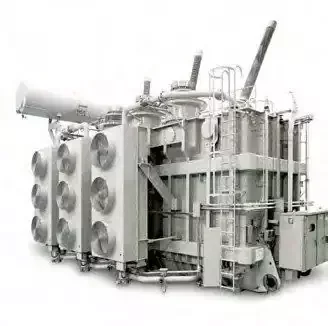
The highest electrical demand in the Kingdom comes in the hottest months, when air conditioning and process cooling run at full load. That is exactly when transformers have the least cooling margin. A transformer that is comfortable at 30 °C ambient can drive its windings into the accelerated ageing range at 50 °C with the same load.
Where the rating comes from
IEC 60076-2 sets temperature rise limits that assume a maximum ambient of 40 °C, a monthly average of 30 °C in the hottest month and a yearly average of 20 °C. Where the site is hotter, the allowed temperature rises must be reduced so the absolute temperatures stay within limits. Saudi utility and industrial specifications therefore state a higher design ambient, commonly around 50 °C, and transformers built for the Kingdom carry more cooling capacity than the same rating built for a temperate climate.
Hot-spot temperature and insulation ageing
The winding hot spot is the hottest point in the winding, usually near the top. IEC 60076-7 uses it to calculate ageing. For ordinary, non-thermally upgraded Kraft paper the reference hot-spot temperature is 98 °C, where the relative ageing rate is 1, and the rate doubles for roughly every 6 K above that. Thermally upgraded paper has a higher reference. A few hours at a high hot-spot temperature are acceptable if they are balanced by cooler periods; what matters is the accumulated loss of life.
| Hot-spot temperature (ordinary paper) | Relative ageing rate |
|---|---|
| 86 °C | about 0.25 |
| 92 °C | about 0.5 |
| 98 °C | 1 (reference) |
| 104 °C | about 2 |
| 110 °C | about 4 |
| 116 °C | about 8 |
| 122 °C | about 16 |
The loading guide also sets maximum temperatures for normal cyclic loading and for emergency loading. Above them the risk shifts from slow ageing to immediate problems such as gas bubbles forming in the insulation, which reduce dielectric strength.
Practical steps for summer
Know the real load. Trend load, top-oil and winding temperature through the summer, not just the peak current.
Keep cooling at full capacity. Clean radiators and fans before summer and check fan and pump operation and alarm settings; dust on radiator fins reduces cooling markedly.
Check the oil. Moisture and acidity speed up paper ageing at any temperature; see transformer oil testing and DGA.
Plan load transfers. Where two transformers share a bus, plan switching so neither exceeds its emergency limit after an outage.
Consider upgrades. Adding fans (ONAN to ONAF) or replacing an old unit with one designed for the real ambient can cost less than a failure.
Specifying new transformers for Saudi sites
State the true maximum and average ambient, altitude, solar radiation and installation (indoor, outdoor or enclosure), the load profile including summer peaks and harmonic content, the cooling class, any overload requirement and the paper type. These choices are covered in power transformer specification.
HD Hyundai Electric from BTGC
HD Hyundai Electric builds power and distribution transformers, gas-insulated switchgear and rotating machines for utilities and industry. BTGC is the HD Hyundai Electric partner in Saudi Arabia, supporting specification, supply and life-cycle planning. See also gas-insulated switchgear and the power and utilities page.
Questions buyers ask
Can a transformer be overloaded in summer? Short overloads within the loading guide limits are acceptable if hot-spot and top-oil temperatures stay within the guide and the cooling is in good condition; the cost is extra ageing that should be planned.
How do we know the hot-spot temperature? From the winding temperature indicator, which is set from the heat-run test, or directly from fibre-optic sensors fitted in new transformers.
Is thermally upgraded paper worth specifying? For heavily loaded units in hot climates it often is, because it ages more slowly at the same temperature.
Contact the BTGC power division
Email power@btc-ksa.com or call +966 13 856 0528. Branches: Dammam, Jubail and Yanbu. Request a quote.