In short: size reduction is usually done in stages, because no single crusher can take run-of-mine rock down to a fine product efficiently. Each stage has a practical reduction ratio, and the right crusher type depends on the material: its hardness, abrasiveness, moisture and how much fines the process can accept. Roll crushers give a controlled product with few fines, impactors and hammermills give high reduction on softer materials, and screens between stages stop material being crushed more than needed. BTGC supplies Astec and TerraSource crushing equipment.
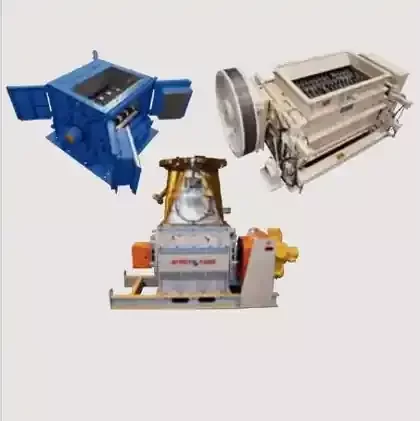
Phosphate, bauxite, limestone and gypsum for cement, coal and petroleum coke for power and industry are all crushed in large volumes in the Kingdom. Choosing the wrong crusher leads to excess fines, high wear costs and blockages with sticky material.
Typical crushing stages
| Stage | Typical role | Common crusher types |
|---|---|---|
| Primary | Reduce run-of-mine lumps to a conveyable size | Jaw, gyratory or heavy roll crushers |
| Secondary | Reduce to an intermediate size for screening or the next process | Roll crushers, impactors, cone crushers |
| Tertiary | Produce the final product size | Roll crushers, hammermills, cage mills |
Matching crusher to material
Hard, abrasive rock with high silica: compression crushers with replaceable wear parts; avoid high-speed impact.
Soft to medium, friable materials such as limestone and gypsum: impactors and hammermills give high reduction in one pass.
Materials where fines are a loss or a problem, such as phosphate or coal for some processes: roll crushers with set gaps.
Wet, sticky or clay-bearing feed: crushers and feeders designed to avoid packing, with suitable chute angles.
Allow for tramp metal protection and safe access for wear part changes.
Design tips for the whole circuit
Scalp fines out ahead of each crusher with screens to save capacity and wear.
Feed crushers evenly across their full width with a suitable feeder.
Choose closed circuit with a screen when the product size limit is strict.
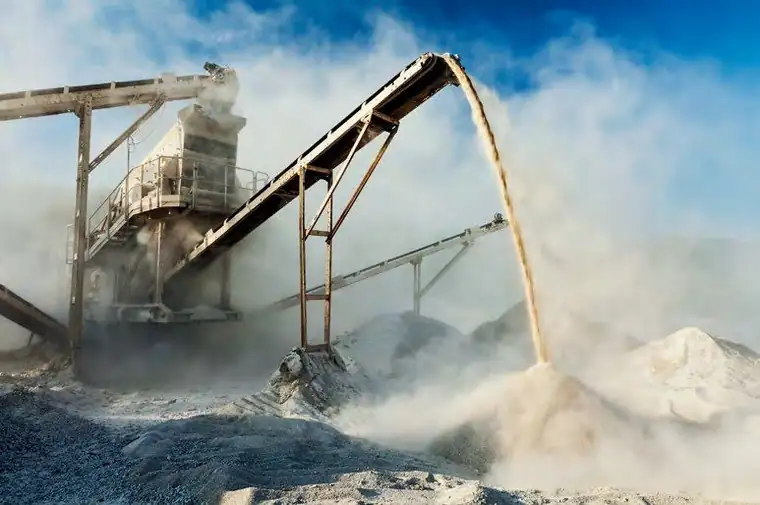
Plan dust control at transfer points and crusher discharge.
Track wear part life and cost per tonne to compare crusher options.
Astec and TerraSource from BTGC
Astec Industries owns TerraSource Global and its Gundlach, Pennsylvania Crusher and Jeffrey Rader brands for roll crushers, impactors, hammermills, granulators and feeders. BTGC is the Astec partner in Saudi Arabia and also supports Jeffrey Rader. See also roll crushers for petcoke and coal, crusher wear parts, screening and bulk material feeders.
Questions buyers ask
How large a reduction can one crusher make? It depends on the type and material; many crushers work best at reduction ratios of roughly 3:1 to 6:1, while impactors can do more on soft material.
Why do roll crushers make fewer fines? They crush by compression between rolls at a set gap, with less shattering than impact crushers.
What data does BTGC need for a crusher proposal? Material type, feed and product size, capacity, moisture, and any limits on fines.
Contact BTGC
Email info@btc-ksa.com or call +966 13 856 0528. Branches: Dammam, Jubail and Yanbu. Request a quote.