In short: an evaporative condenser rejects heat from a refrigeration system by spraying water over the refrigerant coil while air is drawn through it. Because it works close to the wet-bulb temperature, it lets ammonia and other refrigeration systems condense at a lower pressure than air-cooled condensers in hot weather, which cuts compressor energy. Keeping coils clean, water treated, airflow at design and non-condensable gases purged protects that advantage. BTGC supplies Baltimore Aircoil evaporative condensers and parts.
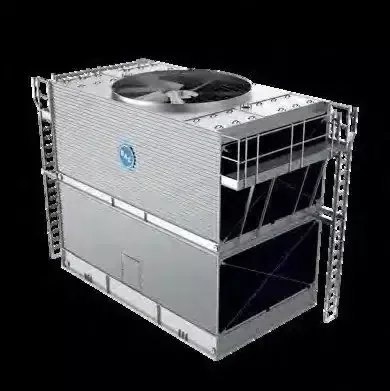
Cold stores, food and beverage plants, dairies, district cooling and some process plants in the Kingdom run industrial refrigeration systems, many using ammonia. The condenser sets the high-side pressure, and every degree of condensing temperature costs compressor power. In a climate where dry-bulb temperatures exceed 45 °C, the way heat is rejected makes a large difference.
How an evaporative condenser works
Hot refrigerant gas from the compressors flows through a coil. Water is sprayed over the outside of the coil while a fan draws air through. A small part of the water evaporates and removes heat, so the coil surface runs close to the air's wet-bulb temperature rather than its dry-bulb temperature. The refrigerant condenses inside the tubes and drains to the receiver. Drift eliminators stop water droplets leaving with the air, and the remaining water collects in the basin and is recirculated.
| Option | Heat rejection limited by | Typical result in Saudi summer |
|---|---|---|
| Air-cooled condenser | Dry-bulb temperature | Highest condensing temperature and compressor power |
| Water-cooled condenser with cooling tower | Wet-bulb temperature plus two approaches (tower and condenser) | Lower than air-cooled, with more equipment |
| Evaporative condenser | Wet-bulb temperature plus one approach | Lowest condensing temperature for the plant area |
Why condensing temperature matters
Lower condensing pressure means a lower compression ratio and less compressor power for the same refrigeration. A commonly quoted rule of thumb is that compressor energy rises by roughly 2 to 3 per cent for every degree Celsius increase in condensing temperature, though the exact value depends on the system. A fouled or scaled evaporative condenser running several degrees above design therefore wastes energy continuously, most of all in summer.
Maintenance that protects performance
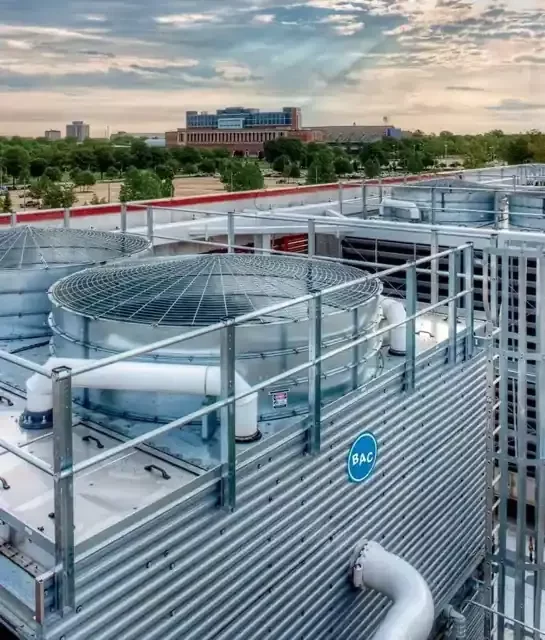
Water treatment: control scale, corrosion and biological growth; scale on the coil insulates it and raises condensing temperature. Legionella control applies as for cooling towers, see Legionella control.
Spray distribution: inspect nozzles and spray branches so the whole coil stays wetted.
Airflow: check fans, belts, drives and inlet screens, and keep drift eliminators clean and in place.
Non-condensable gases: air in the system raises head pressure, so automatic purgers should be checked regularly.
Coil inspection: look for corrosion and scale at each shutdown, and check galvanised or coated surfaces.
Choosing new equipment
Size the condenser for the design wet bulb at the site, not a generic value, and consider capacity control with variable-speed fans. Where water is scarce or treatment is difficult, hybrid or adiabatic options may suit, as discussed in adiabatic coolers. Closed-circuit coolers serve similar duties for liquids, see closed-circuit cooling towers.
Baltimore Aircoil from BTGC
Baltimore Aircoil Company builds evaporative condensers, open and closed-circuit cooling towers and adiabatic coolers. BTGC is the BAC partner in Saudi Arabia for new equipment, spare parts and refurbishment. See also why cooling towers lose capacity and the process and thermal page.
Questions buyers ask
Are evaporative condensers suitable for ammonia? Yes, they are widely used in ammonia refrigeration; coil materials and construction follow the refrigeration codes that apply.
How much water does an evaporative condenser use? Water is lost to evaporation, blowdown and a little drift; evaporation follows the heat load, and blowdown depends on water quality and cycles of concentration.
Can an old condenser be refurbished? Often yes: coils, fans, drives, eliminators and spray systems can be replaced; BTGC surveys the unit first.
Contact BTGC
Email info@btc-ksa.com or call +966 13 856 0528. Branches: Dammam, Jubail and Yanbu. Request a quote.