In short: pressure gauges and transmitters drift over time because of vibration, pulsation, heat and overpressure. Calibration compares them with a more accurate, traceable reference at several points, records how far off they were and adjusts or replaces them. Setting intervals from criticality and drift history, and keeping good records, turns calibration from a routine chore into a source of reliability data. BTGC supplies Nuova Fima pressure gauges, transmitters and diaphragm seals.
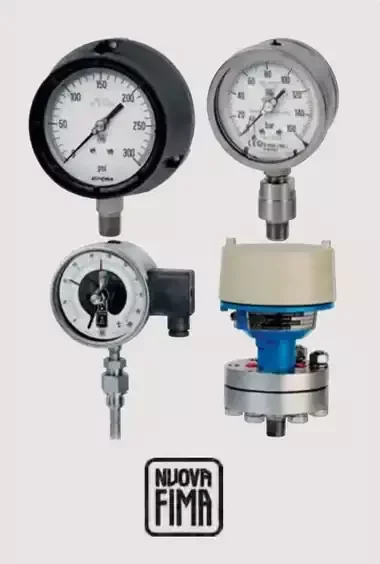
Plants in the Kingdom run thousands of pressure instruments, many in hot outdoor locations and on vibrating equipment. Wrong readings can hide process problems or trigger false trips.
Calibration basics
| Step | What it involves |
|---|---|
| Reference standard | Deadweight tester or calibrator, traceable to accredited labs |
| Test points | Several points across the range, rising and falling |
| As-found data | Readings before any adjustment, showing drift |
| Adjustment | Zero and span for transmitters, or repair or replacement for gauges |
| As-left data | Readings after adjustment, within tolerance |
| Records and labels | Date, results, next due date and technician |
Setting intervals
Start from the manufacturer guidance and the instrument accuracy class.
Shorten intervals for safety, custody transfer and critical control loops.
Lengthen intervals for stable instruments with good as-found history.
Follow proof test intervals for instruments in safety instrumented functions.
Review intervals every year using the drift data.

Practical tips
Check for damage, blocked impulse lines and failed diaphragm seals before calibrating.
Calibrate at the mounting position or correct for head where it matters.
Replace gauges with bent pointers or zero offset after overpressure.
Use dampening or diaphragm seals where vibration and pulsation cause drift; see gauges for vibration and pulsation.
Store calibration data where reliability engineers can trend it.
Nuova Fima from BTGC
Nuova Fima of Italy makes pressure gauges, transmitters, switches, thermometers and diaphragm seals for oil and gas, petrochemical and power plants. BTGC is the Nuova Fima partner in Saudi Arabia. See also pressure transmitter selection, thermowells and the petrochemicals sector page.
Questions buyers ask
How often should pressure gauges be calibrated? It depends on criticality and history; many plants use 6 to 24 months.
What does as-found data show? How much the instrument drifted since the last calibration.
Does BTGC supply replacement gauges? Yes, Nuova Fima gauges, transmitters and diaphragm seals.
Contact BTGC
Email info@btc-ksa.com or call +966 13 856 0528. Branches: Dammam, Jubail and Yanbu. Request a quote.