In short: offshore platforms and subsea pipelines in the Arabian Gulf use valves that must work for years in warm, salty seawater with little or no chance of maintenance. Topside valves face marine corrosion and limited space; subsea valves must be operated by divers, ROVs or actuators and sealed against external pressure. Material selection, coatings, actuation interfaces and extended testing to standards such as API 6DSS are the keys. BTGC supplies KPC pipeline and subsea valves.
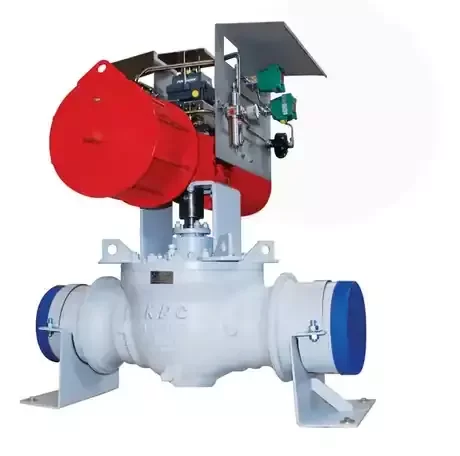
The Kingdom produces large volumes of oil and gas offshore, with platforms, subsea pipelines and tie-ins. Offshore valve failures are costly because access requires vessels, divers or ROVs.
Topside and subsea requirements
| Area | Key points |
|---|---|
| Topside valves | Marine coatings, corrosion-resistant bolting, compact actuators, fire-safe design |
| Subsea valves | Design to API 6DSS, external pressure sealing, ROV or diver interfaces, cathodic protection compatibility |
| Materials | Corrosion-resistant alloys or overlays for wetted parts in sour or seawater service |
| Actuation | Hydraulic or electric actuators designed for long life with minimal maintenance |
| Testing | Extended hydrostatic, gas and hyperbaric testing as specified |
Specification tips
Define water depth, temperature, fluid composition and design life.
Specify sour service requirements; see sour service valves.
Agree ROV interface standards and torque values with the installation contractor.
Require full material traceability and documentation.
Plan spares and intervention tooling with the valves.

Maintenance and integrity
Inspect topside valves for coating breakdown and bolting corrosion.
Monitor cathodic protection on subsea assets.
Cycle valves during planned campaigns where safe.
Keep records of every intervention and test.
Use sealant injection where designs allow, if leakage appears.
KPC from BTGC
KPC Corporation of Korea supplies trunnion-mounted ball valves up to 60 inch, through-conduit gate valves and subsea valves for oil and gas transmission. BTGC is the KPC partner in Saudi Arabia. See also gas transmission pipeline valves, trunnion ball valves and the oil and gas sector page.
Questions buyers ask
What is API 6DSS? The API specification for subsea pipeline valves.
Can subsea valves be repaired? Usually by retrieving them or their actuators; many are designed for long life without intervention.
Does BTGC supply offshore topside valves? Yes, with marine coatings and project documentation.
Contact the BTGC valve team
Email valves@btc-ksa.com or call +966 13 856 0528. Branches: Dammam, Jubail and Yanbu. Request a quote.