In short: a bottom outlet valve sits directly on the lowest nozzle of a reactor, tank or crystalliser so the vessel can be emptied completely. A flush-bottom design places the closing element level with the vessel floor, leaving no dead pocket where product can settle, solidify or contaminate the next batch. The main choice is between disc types that open into the vessel and piston or plug types that retract away from it. BTGC supplies Krombach bottom drain valves and large-diameter specialty valves.
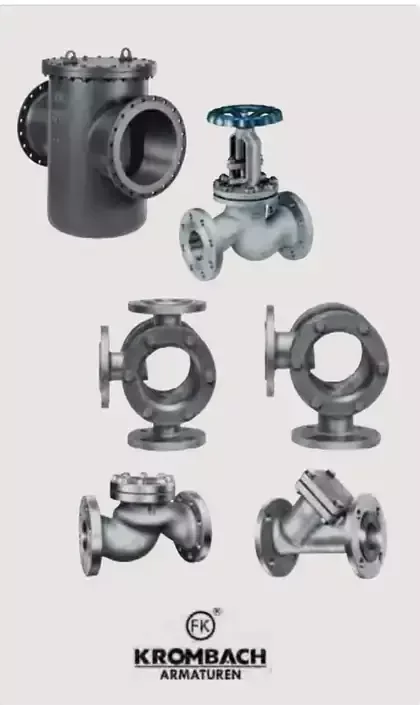
Batch reactors, polymer and resin units, crystallisers, mixing tanks and storage vessels in Jubail and Yanbu all need a reliable way to drain. A normal valve bolted below a nozzle leaves a stub of pipe full of product; in viscous, crystallising or polymerising service that stub blocks, contaminates batches or becomes a safety problem when it is cleared.
Main designs
| Type | How it works | Best for |
|---|---|---|
| Disc type, opening into the vessel | The disc lifts upwards into the vessel; the seat is flush with the vessel bottom | Liquids and light slurries; needs clearance from the agitator |
| Piston or plug type, retracting downwards | The plug moves down away from the vessel into the valve body | Solids, crystals, viscous products and where the agitator is close to the bottom |
| Ball or plug valves with flush adapters | Quarter-turn valves fitted close to the vessel | Simpler services where a small dead space is acceptable |
Selection points
Process: viscosity, solids content, tendency to crystallise or polymerise, temperature and pressure.
Clearance: the opening stroke of a disc valve must not reach the agitator blades in any position.
Heating: jacketed bodies keep molten or viscous products flowing; check heating medium and temperature.
Materials: stainless steels, nickel alloys or PTFE lining for corrosive chemicals; see valve body materials.
Sealing: bellows or high-performance packing where emissions or toxic products are involved.
Operation: pneumatic actuators with limit switches for automated batch sequences, and manual override.

Installation and maintenance
Check the vessel nozzle and flange design early: flush-bottom valves often need a specific nozzle shape and length.
Allow access below the vessel for removing the valve and actuator.
Test seat tightness after installation and after every overhaul; see seat leakage classes.
Inspect seats and plug faces for erosion or product build-up at each turnaround.
Keep a spare valve or trim set for critical batch reactors to avoid long outages.
Krombach from BTGC
Krombach-Armaturen of Germany builds triple-offset butterfly valves, fabricated gate and check valves, bottom drain valves and valves for extreme temperatures above 800 °C. BTGC is the Krombach partner in Saudi Arabia, with valve testing and repair at its Jubail service center. See also butterfly valve types and the petrochemicals sector page.
Questions buyers ask
Can a bottom outlet valve be fitted to an existing vessel? Often yes, if the bottom nozzle can be adapted; the vessel owner must approve any change to the pressure vessel.
Disc or piston type for a slurry? A piston type that retracts away from the vessel usually copes better with solids.
What data does BTGC need? Vessel nozzle drawing, product data, design pressure and temperature, agitator details and actuation requirements.
Contact the BTGC valve team
Email valves@btc-ksa.com or call +966 13 856 0528. Branches: Dammam, Jubail and Yanbu. Request a quote.