In short: the joint between each tube and the tubesheet is where most shell and tube exchangers start to leak. Expanded joints rely on the tube being pressed into the tubesheet hole; seal welds add a light weld for leak-tightness; strength welds carry the full tube load through the weld. The right choice depends on pressure, temperature, cycling, materials and how serious a leak between the two sides would be. BTGC supplies Hemaco shell and tube exchangers with joints designed and tested for the service.
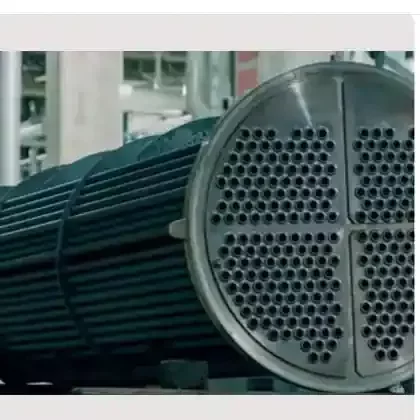
A shell and tube exchanger can have thousands of tube ends. A leak at any one of them mixes the shell-side and tube-side fluids: cooling water into hydrocarbon, process gas into cooling water, or high-pressure steam into a low-pressure system. Many exchanger failures that end in retubing start as a few leaking joints.
Three ways to make the joint
| Joint | How it seals and holds | Typical use |
|---|---|---|
| Expanded (roller or hydraulic) | The tube is expanded so its outer wall grips the tubesheet hole, often into grooves; seal and strength both come from the contact | Moderate pressure and temperature, compatible materials, clean services |
| Expanded and seal-welded | A light weld at the tube end gives a leak-tight barrier; the expansion still carries the load | Where leakage between sides must be prevented: toxic or high-value fluids, hydrogen service |
| Strength-welded (often also lightly expanded) | The weld is designed to carry the full tube load | High pressure and temperature, thermal cycling, or where expansion alone cannot hold |
What decides the choice
Pressure and temperature. At high temperature the expanded contact can relax as tube and tubesheet creep or expand differently.
Thermal cycling. Start-ups and shutdowns move tubes relative to the tubesheet and can work joints loose.
Materials. Very different thermal expansion between tube and tubesheet, for example titanium tubes in a steel tubesheet, affects joint design and weldability.
Consequence of a leak. Hydrogen, toxic fluids or high-pressure feedwater justify welded joints.
Crevice corrosion. Seal welding and full-depth expansion close the crevice behind the tubesheet face where corrosion can start.
Design rules and testing
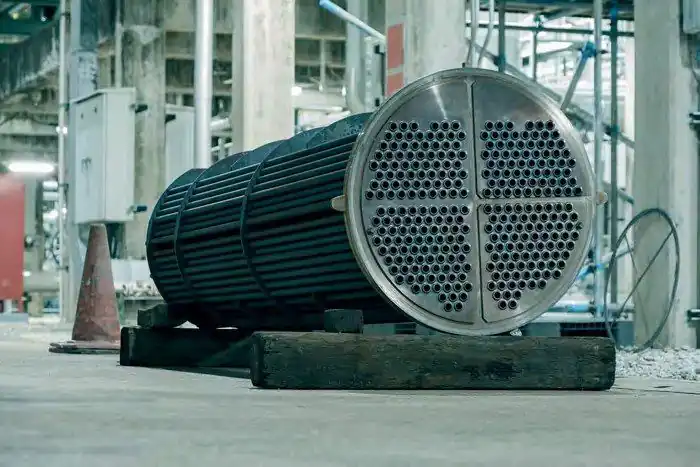
ASME Section VIII Division 1 Appendix A gives the basis for qualifying tube-to-tubesheet joints and their allowable loads, and TEMA sets standard tube hole dimensions, grooving and expansion requirements. Welded joints need qualified procedures and welders, often with mock-up tests for each tube and tubesheet material combination. Joints are proved by a hydrostatic test and, for critical services, by a helium or other gas leak test that finds leaks far smaller than water can.
Repairing leaking joints
Locate leaking tubes with a shell-side pressure or leak test with the channels removed.
Re-expand leaking expanded joints if the tube wall and hole are sound; do not over-expand thin tubes.
Repair seal welds by grinding out the defect and rewelding to the qualified procedure.
Plug tubes that cannot be repaired, within the plugging limit of the design.
When many joints leak or the tubesheet is damaged, consider retubing or a new bundle, as covered in retubing or replacing an exchanger.
Hemaco from BTGC
Hemaco designs and fabricates shell and tube heat exchangers, air coolers and pressure vessels to ASME and TEMA, with tube-to-tubesheet joints chosen and qualified for the duty. BTGC is the Hemaco partner in Saudi Arabia. See also exchangers in special alloys, fouling and cleaning and the petrochemicals sector page.
Questions buyers ask
Are welded joints always better? Not always. Welding adds cost and heat-affected zones, and some materials are hard to weld; expanded joints are reliable in many moderate services.
Can a welded tube be removed for retubing? Yes, with more work: the weld is machined out before the tube is pulled, and the tubesheet holes are inspected and prepared for new tubes.
What should we specify for hydrogen service? Welded joints with a qualified procedure, expansion behind the weld where required, and a sensitive gas leak test; the project specification sets the details.
Contact BTGC
Email info@btc-ksa.com or call +966 13 856 0528. Branches: Dammam, Jubail and Yanbu. Request a quote.