In short: air-cooled heat exchangers reject heat to ambient air, so their capacity falls as the air gets hotter, exactly when Saudi plants need them most. Dust-clogged fins, slipping belts, wrong fan blade pitch and hot air recirculating from outlet to inlet make the summer shortfall worse. A pre-summer programme of fin cleaning, fan and drive checks and recirculation control, and in some cases spray or adiabatic pre-cooling, recovers much of the lost duty. BTGC supplies Kelvion air coolers and dry coolers and supports their maintenance.
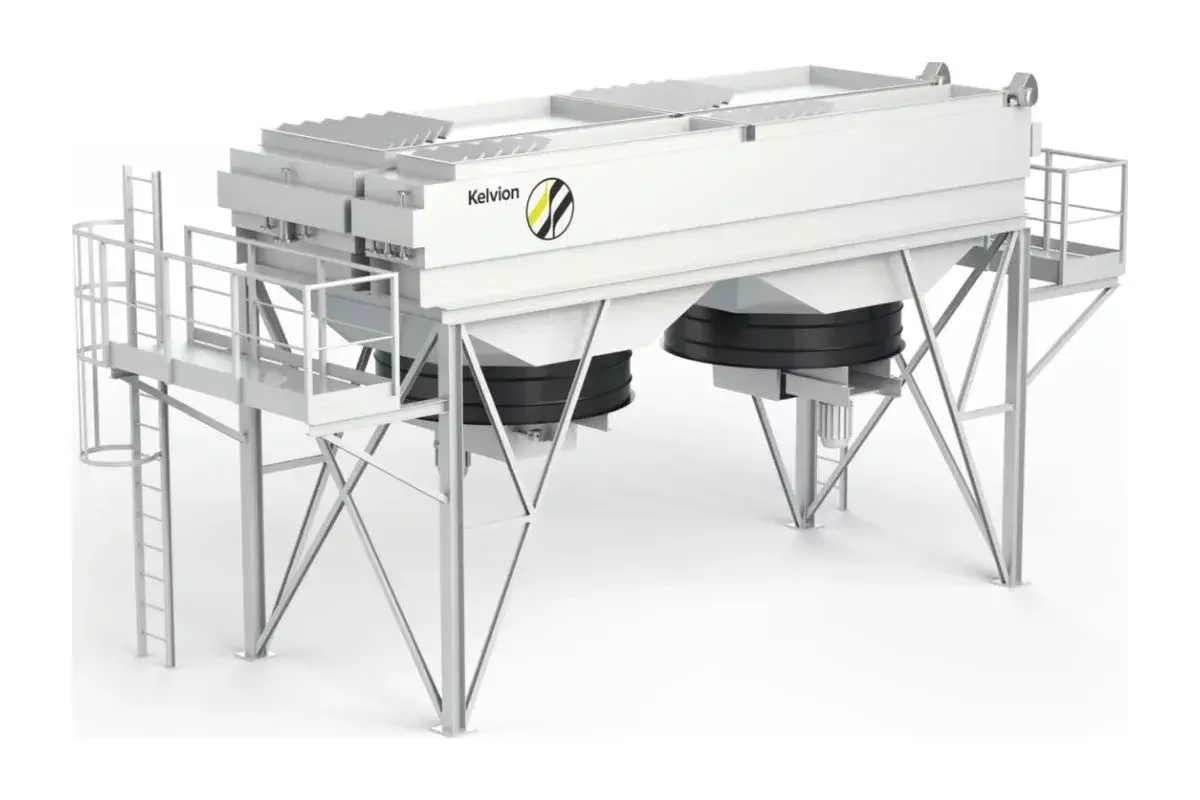
In refineries, gas plants, compressor stations and power plants across the Kingdom, air coolers replace water cooling where water is scarce. They are designed for a summer design air temperature, but over time their real performance drops below the design curve. The gap shows up as high process outlet temperatures, compressor discharge alarms and reduced throughput on the hottest afternoons.
Why capacity falls
| Cause | Effect | Check |
|---|---|---|
| Fouled fins (dust, sand, oil mist, insects) | Less airflow and heat transfer | Inspect with a light behind the bundle; measure air-side pressure drop |
| Fan problems: wrong blade pitch, worn belts, slipping drives, failed motors | Lower airflow | Measure motor current and airflow; check blade angle and belt tension |
| Hot air recirculation | Inlet air hotter than ambient | Compare inlet temperature with ambient; review layout, wind and nearby equipment |
| Internal fouling | Lower heat transfer on the process side | Trend process outlet temperature and pressure drop against design |
| Louvres stuck closed, damaged plenums or seals | Air bypasses the bundle or is restricted | Inspect louvre linkages, plenum panels and seals |
Pre-summer checklist
Clean fins with low-pressure water or air from the air-outlet side, against the airflow, without bending fins; avoid high-pressure jets that flatten them.
Set fan blades to the design pitch and check tip clearance to the fan ring.
Replace worn belts and check sheave alignment, or check gear drives and couplings.
Check fan motors, bearings and vibration switches, and repair any fan out of service before summer.
Free and adjust louvres and check the control system and variable-speed drives.
Repair plenum panels, seals and fan rings so air passes through the bundle, not around it.
Recirculation and layout
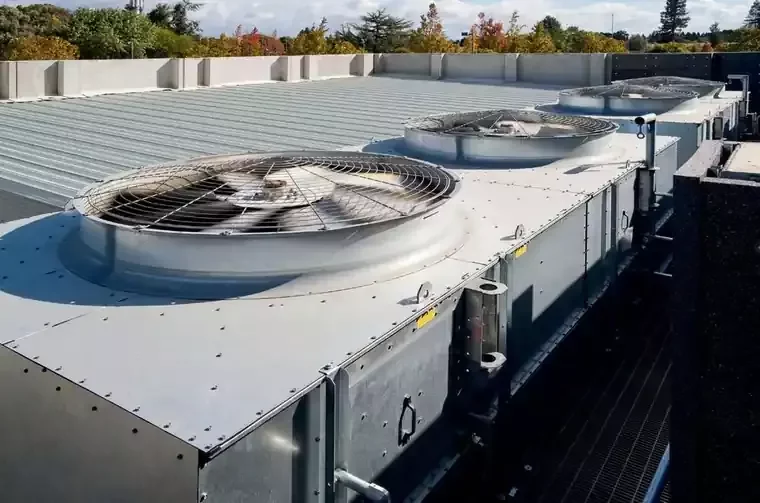
Hot exhaust air drawn back into the inlet raises the effective air temperature and can cost several degrees of approach. It is worst for forced-draught units, banks close to buildings or tall equipment, and banks in a crosswind. Wind walls, extended fan stacks or moving nearby obstructions can reduce it. On new projects, spacing and orientation are part of the design, as discussed in API 661 air coolers.
Adding capacity in summer
Where cleaning and fan work are not enough, inlet air can be pre-cooled by evaporation, using sprays or adiabatic pads, for a limited number of hot hours each year. Water quality must be controlled to avoid scaling the fins. For larger shortfalls, extra bays or a hybrid system may be needed; see adiabatic coolers and air fin coolers.
Kelvion from BTGC
Kelvion supplies air-cooled heat exchangers, dry coolers, plate heat exchangers and shell and tube exchangers for industry and utilities. BTGC is the Kelvion partner in Saudi Arabia for new equipment, replacement bundles and spare parts. See also plate heat exchanger maintenance and the process and thermal page.
Questions buyers ask
How often should air cooler fins be cleaned? At least once before each summer, and more often in dusty areas or near sources of oil mist; inspection decides.
Does fan blade pitch really make a difference? Yes. Blades set below the design angle move less air; resetting them to design, within the motor's power limit, can recover a noticeable part of the lost duty.
Is spray cooling of fins safe? Only with treated water and a system designed for it; untreated water leaves scale on fins and reduces performance over time.
Contact BTGC
Email info@btc-ksa.com or call +966 13 856 0528. Branches: Dammam, Jubail and Yanbu. Request a quote.