In short: gasketed plate heat exchangers pack a lot of surface into a small frame and can be opened for cleaning, but their gaskets and thin plates need careful handling. Most leaks and failures come from ageing or unsuitable gaskets, uneven tightening, plates hung in the wrong order and deposits left behind after cleaning. A disciplined procedure, the right gasket material and good records keep them tight for years. BTGC supplies Kelvion plate heat exchangers, spare plates and gaskets, and arranges Kelvion service.
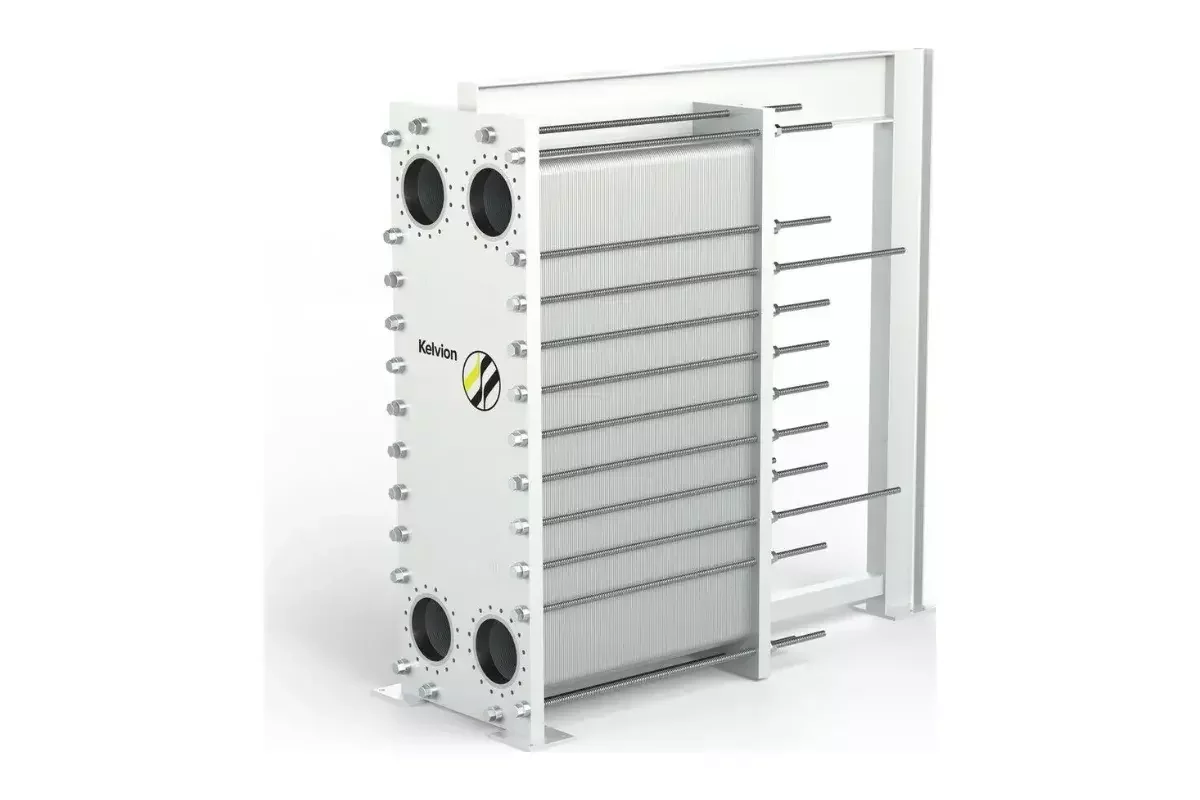
Plate heat exchangers are common in Saudi plants on closed cooling water, seawater-cooled loops, lube oil coolers, HVAC and district cooling, and water and food applications. They are efficient because the corrugated plates create turbulence at low velocities, but the same narrow channels can block, and every plate carries a gasket that ages with temperature and chemistry.
Choosing gasket materials
| Material | Typical use | Limits |
|---|---|---|
| EPDM | Water, steam condensate, many chemicals | Not for oils and hydrocarbons |
| NBR (nitrile) | Oils, fuels and fats | Lower temperature limit than EPDM; not for some oxidising chemicals |
| HNBR | Oils at higher temperatures | Higher cost |
| FKM (fluoroelastomer) | Aggressive chemicals, hot oils and acids | Higher cost; not ideal for hot water or steam |
Temperature limits depend on the exact compound and the gasket maker's data, so the material is confirmed for the real maximum temperature and for any cleaning chemicals, not just the main process fluid.
A good maintenance routine
Before opening. Record the tightening dimension between the frame and pressure plates, mark the plate pack with a diagonal line so the order can be checked, and drain and cool the unit.
Opening. Loosen the tightening bolts evenly in the specified sequence so the pressure plate stays parallel.
Inspection. Check each plate for cracks, holes and corrosion, especially at the ports and in crevices under gaskets; dye penetrant testing finds cracks that cannot be seen.
Cleaning. Clean plates with soft brushes and compatible chemicals; avoid steel wire brushes, and chloride-containing cleaners on stainless steel.
Regasketing. Replace gaskets as a set when they are hard, flattened or cracked, using the correct type for the plate model; clip-on gaskets avoid glue but must be fully seated.
Reassembly. Hang plates in the correct order and orientation, then tighten evenly to the recorded or specified dimension, never beyond the minimum.
Testing. Pressure test each side separately and check for leaks between channels before returning the unit to service.
When gaskets are the problem
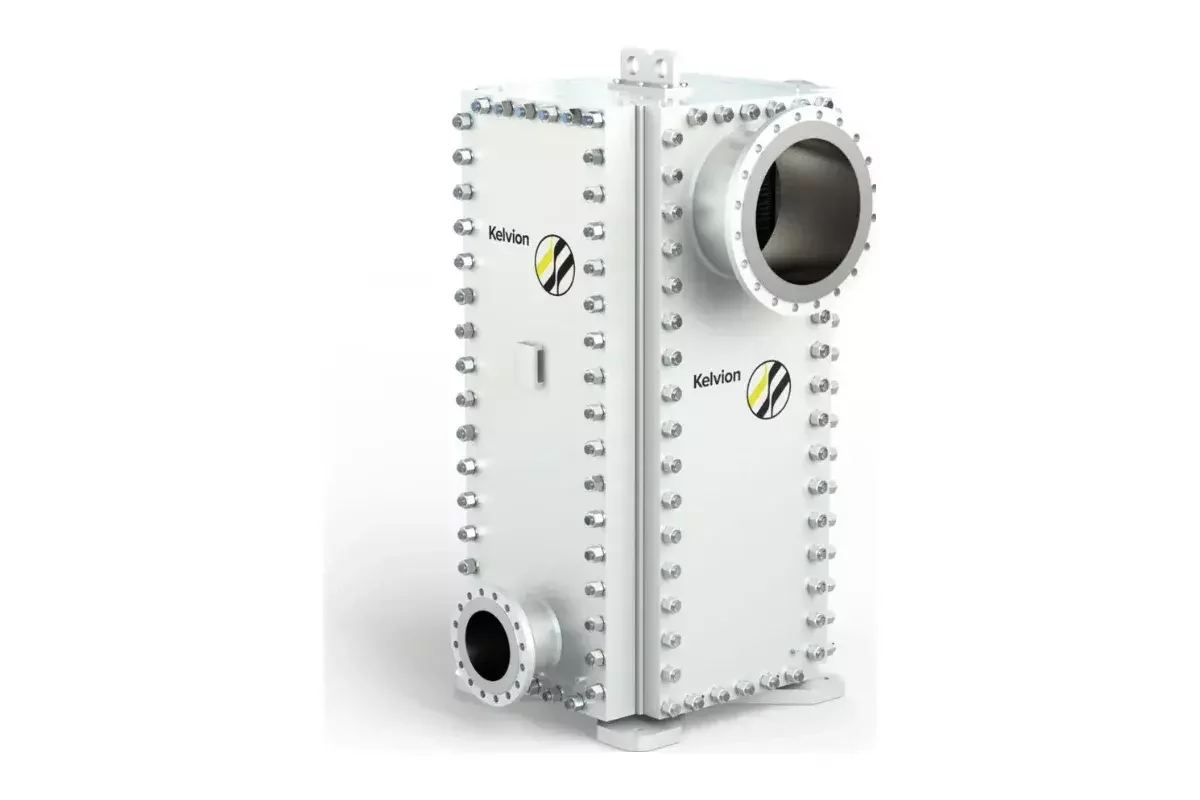
If temperature, pressure or chemistry is beyond what elastomer gaskets tolerate, a semi-welded design, with plates welded in pairs and gaskets only on one side, or a fully welded plate exchanger removes gaskets from the difficult side. These designs keep much of the compactness of a plate exchanger while handling harsher duties, as discussed in plate versus shell and tube heat exchangers.
Seawater and fouling
On seawater duties titanium plates are usual, and fouling from silt and marine growth is the main reason for opening the unit. Good intake screening and strainers upstream, as described in passive intake screens, extend the interval between cleanings. Material choices for seawater are covered in seawater-cooled heat exchangers.
Kelvion from BTGC
Kelvion supplies gasketed, semi-welded and welded plate heat exchangers, shell and tube exchangers and air coolers, together with service including mechanical and chemical cleaning, reconditioning, regasketing and leak testing. BTGC is the Kelvion partner in Saudi Arabia for new units, spare plates and gaskets. See also air fin coolers and the process and thermal page.
Questions buyers ask
Can we regasket the unit ourselves? Yes, with the correct gaskets and procedure. For critical units or large plate packs, a reconditioning service with cleaning and crack testing is often faster and more reliable.
How do we order the right gaskets? Send the nameplate details: model, serial number and plate count. The gasket type depends on the plate model and the fluid.
Why does the exchanger leak after reassembly? Usually from uneven tightening, a gasket not seated in its groove, a plate hung in the wrong position, or tightening beyond the minimum dimension that crushes the gaskets.
Contact BTGC
Email info@btc-ksa.com or call +966 13 856 0528. Branches: Dammam, Jubail and Yanbu. Request a quote.