In short: plate heat exchangers come in several constructions that trade flexibility against pressure and temperature capability. Gasketed units can be opened, cleaned and extended; brazed units are compact and economical but sealed; semi-welded units remove gaskets from one side; fully welded units handle the highest pressures, temperatures and aggressive fluids without gaskets. The right type depends on the fluids, conditions, fouling and maintenance approach. BTGC supplies Kelvion plate heat exchangers of every type.
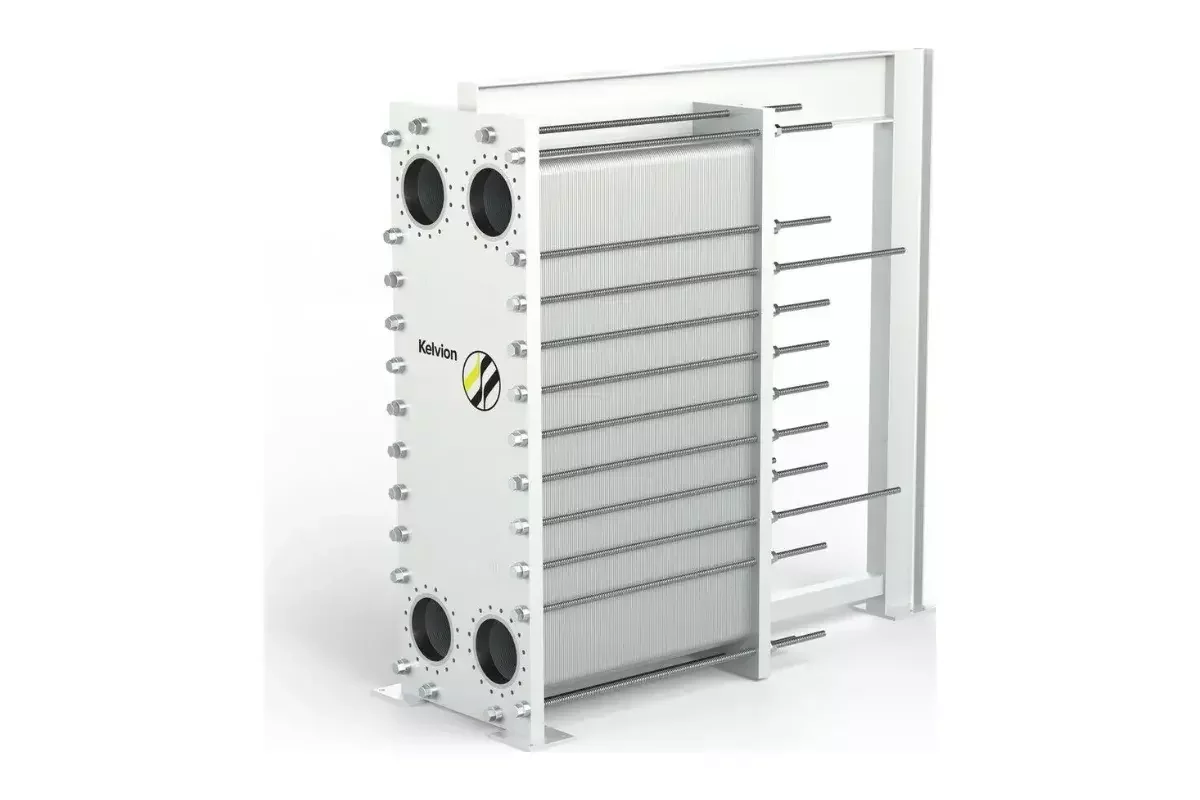
Plate heat exchangers are used across Saudi industry: closed cooling water loops, seawater coolers, lube oil coolers, HVAC and district cooling, refrigeration, chemicals and food. Choosing the construction matters as much as sizing the surface, because it decides what the unit can withstand and how it will be maintained.
The main constructions
| Type | How plates are sealed | Strengths | Limits |
|---|---|---|---|
| Gasketed | Elastomer gaskets between plates, held in a frame by tie bolts | Can be opened for cleaning and inspection; plates can be added or removed; wide material choice | Gasket temperature and chemical limits; moderate pressures |
| Brazed | Plates brazed together, usually with copper or nickel | Very compact, low cost, high pressure for its size; common for refrigerants and HVAC | Cannot be opened; copper braze unsuitable for ammonia and some fluids; fouling services need care |
| Semi-welded | Plates laser-welded in pairs, with gaskets only on one side | Aggressive or high-pressure fluid in the welded channel; the other side can still be opened | Welded side cleaned only chemically |
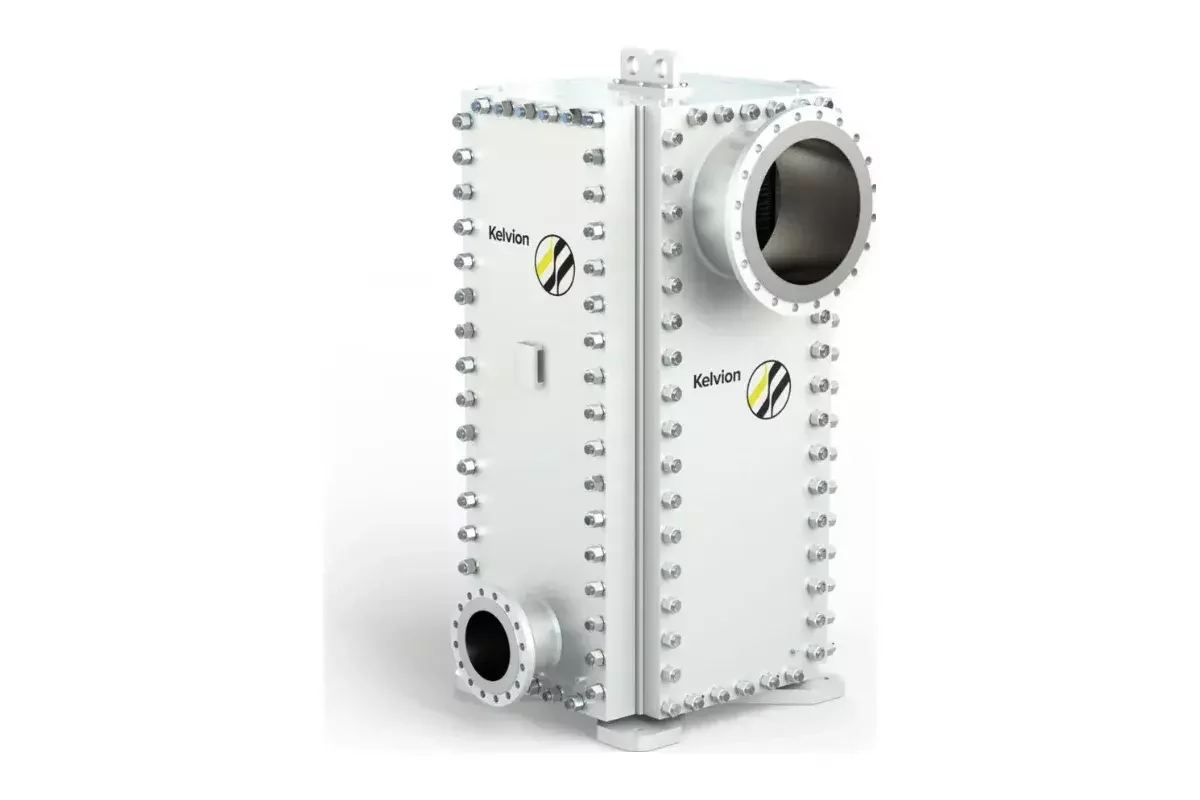
| Fully welded (plate and block designs) | All channels welded, no gaskets | High pressure and temperature, aggressive chemicals, hydrocarbons | Higher cost; cleaning chemical, or through removable panels in some designs |
Choosing between them
Clean water and glycol loops: gasketed units are usually the most economical and easiest to maintain.
Refrigerants and small HVAC duties: brazed units are compact and cost-effective.
Ammonia refrigeration and aggressive media: semi-welded units keep the hazardous fluid in welded channels.
High temperature, high pressure or hydrocarbons: fully welded designs, or shell and tube where pressure and fouling demand it, as compared in plate versus shell and tube.
Heavy fouling or fibres: wide-gap plate designs, or shell and tube.
Materials
Plate material follows the fluids: stainless steel for clean water, titanium for seawater and chlorides, nickel alloys for aggressive chemicals. Gasket material is chosen for temperature and chemistry, as described in gasketed plate heat exchanger maintenance, and seawater material choices are covered in seawater-cooled heat exchangers.
Data for an enquiry
Both fluids, flows, inlet and outlet temperatures and allowed pressure drops.
Design pressure and temperature on each side.
Expected fouling and the cleaning method.
Space limits and any need to expand capacity later.
Applicable codes and the end-user specification.
Kelvion from BTGC
Kelvion supplies gasketed, brazed, semi-welded and welded plate heat exchangers, shell and tube exchangers and air coolers. BTGC is the Kelvion partner in Saudi Arabia for new units, spare plates and gaskets. See also air-cooled heat exchangers in Saudi summer and the process and thermal page.
Questions buyers ask
Can a brazed plate heat exchanger be cleaned? Only by chemical cleaning in place, because it cannot be opened; choose it for clean fluids.
Can we add capacity to a gasketed unit later? Often yes, by adding plates if the frame has room and the pressure drop allows; BTGC checks with Kelvion.
Is a welded plate unit suitable for hydrocarbons? Yes. Welded designs are used for hydrocarbon and high-pressure duties within their design limits.
Contact BTGC
Email info@btc-ksa.com or call +966 13 856 0528. Branches: Dammam, Jubail and Yanbu. Request a quote.