In short: gate, globe and butterfly valves can all start and stop flow, but they behave very differently. Gate valves give a straight, low-resistance path for full-open isolation; globe valves throttle and seal well at the cost of a higher pressure drop; butterfly valves are compact and economical in large sizes. Choosing by habit rather than by duty leads to eroded gates, noisy globes and leaking butterflies. BTGC supplies KSB gate, globe and butterfly valves for water, power and industrial plants.
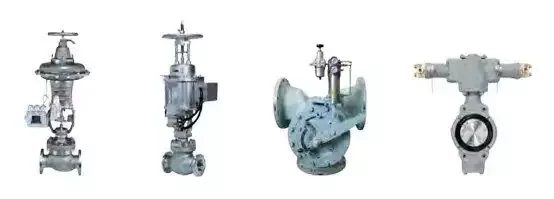
In a typical Saudi plant the same pipe rack carries cooling water, steam, condensate, process liquids and utilities. Each line needs isolation, some need throttling, and all must be maintainable. Valve type is the first decision on the data sheet, and it fixes cost, weight, pressure drop and maintenance for decades.
How each type works
| Type | Closure element | Flow path when open |
|---|---|---|
| Gate | A wedge or parallel gate lifts fully out of the flow | Straight through, very low pressure drop |
| Globe | A plug or disc moves onto a seat at right angles to the flow | Flow turns through the body; higher pressure drop |
| Butterfly | A disc rotates a quarter turn on a shaft in the flow | Disc stays in the stream; low to moderate pressure drop |
Comparing them
| Feature | Gate | Globe | Butterfly |
|---|---|---|---|
| Throttling | Poor; partly open gates erode and vibrate | Good; designed for it | Fair between about 20 and 70 degrees open |
| Shut-off | Good when clean | Very good | Very good with soft seats; metal seats depend on design |
| Pressure drop when open | Lowest | Highest | Low to moderate |
| Operating time | Many turns, slow | Fewer turns than a gate | Quarter turn, fast |
| Size and weight in large sizes | Heavy and tall | Heavy | Light and compact |
| Typical use | Isolation on water, steam and hydrocarbons | Control, bypasses, drains, vents, fine regulation | Water, cooling water, seawater, large utility lines, HVAC |
Practical rules
Do not throttle with gate valves: the partly open gate and seats erode quickly and the gate can chatter.
Use globe valves for bypasses, drains, vents and manual regulation, especially on steam, and choose a bellows seal where stem leakage is unacceptable, as in bellows-seal valves.
Prefer butterfly valves in large sizes on water and utility service, where gate valves become heavy and costly; see butterfly valves for cooling water.
For high-pressure, high-temperature isolation, consider triple-offset butterfly or pressure seal gate valves, as explained in butterfly valve types and pressure seal valves.
Check flow direction markings on globe and check valves, and on any valve made unidirectional to prevent pressure locking.
Materials and standards
Body material follows the fluid and temperature: ductile iron or carbon steel for water, carbon or alloy steel for steam, stainless or duplex for corrosive or seawater service. Design standards depend on the industry, for example EN and ISO standards for water and building services, and API 600, API 602 or ASME B16.34 for process and power. The project specification names the ones that apply, together with the seat test standard explained in valve seat leakage classes.
KSB from BTGC
KSB supplies gate, globe, check and butterfly valves, including bellows-seal designs, for industry, water and power, with manual, pneumatic and electric actuation. BTGC is a KSB partner in Saudi Arabia for industrial valves. See also actuator sizing and the flow control and valves page.
Questions buyers ask
Can a gate valve be used for coarse throttling during start-up? Only briefly and with care; regular throttling wears the seats. Fit a globe bypass if throttling is needed.
Are butterfly valves suitable for steam? Metal-seated double or triple-offset designs are; concentric rubber-lined valves are not.
Which valve gives the tightest shut-off? Generally a soft-seated valve; with metal seats, a well-designed globe or triple-offset valve. State the leakage class or rate on the data sheet.
Contact the BTGC valve team
Email valves@btc-ksa.com or call +966 13 856 0528. Branches: Dammam, Jubail and Yanbu. Request a quote.