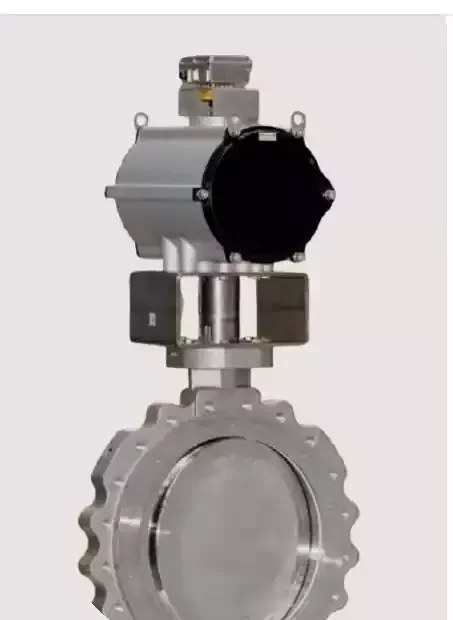
In short: a high-performance (double-offset) butterfly valve can be a good control valve for large lines with moderate pressure drop. It passes much more flow than a globe valve of the same size and weighs and costs far less. But it recovers more pressure after the disc, so it cavitates and chokes earlier, and it controls best only between about 20 and 70 degrees of opening. Used inside those limits, with a good actuator and positioner, it gives reliable throttling. BTGC supplies Xomox high-performance butterfly valves.
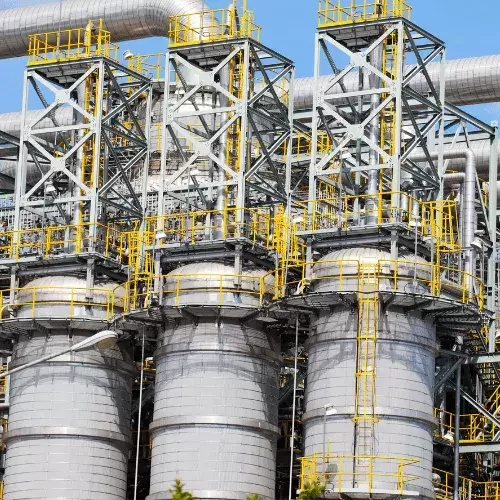
Cooling water, utility steam, fuel gas, large hydrocarbon lines and many water and wastewater services in the Kingdom need flow control on lines of 8 inch and larger. Globe valves of that size are heavy and expensive, so plants often look at high-performance butterfly valves for the job.
Why a butterfly valve can throttle
The double offset moves the disc away from the seat soon after opening, reducing seat wear and torque.
Capacity (Cv) per inch of size is several times that of a globe valve, so a smaller valve often does the job.
The inherent characteristic is close to equal percentage over the middle of the stroke, which suits many control loops.
Fewer parts and a shorter face-to-face mean lower weight, cost and maintenance.
Limits to respect
| Limit | Why it matters |
|---|---|
| Usable range about 20 to 70 degrees | Below about 20 degrees the disc is close to the seat and control is coarse; above about 70 degrees there is little extra flow |
| High pressure recovery | The low recovery factor (FL) means cavitation and choked flow start at a lower pressure drop than in a globe valve |
| Dynamic torque | Flow forces on the disc change with opening; the actuator must be sized for the worst case |
| Shutoff | Soft seats give tight shutoff but have temperature limits; metal seats suit higher temperatures |
As a rule, if the sizing calculation shows incipient cavitation or noise above site limits, a globe valve with a staged trim is the safer choice, as explained in cavitation and noise in control valves.
Specification checklist
All flow cases with inlet and outlet pressures, so the valve can be checked at minimum and maximum flow.
Seat type: reinforced PTFE for tight shutoff at moderate temperature, metal seat for high temperature or abrasive service.
Fire-safe design and stem sealing to low-emission standards where hydrocarbons are handled; see fire-safe and low-emission valves.
Actuator with positioner, sized for seating and dynamic torque with margin; see actuator sizing.
Body materials and disc coating suited to the fluid; see valve body materials.
Xomox from BTGC
Xomox, part of Crane ChemPharma and Energy, supplies sleeved plug valves, lined plug and ball valves and high-performance butterfly valves for chemical and petrochemical plants. BTGC is the Xomox partner in Saudi Arabia. See also butterfly valve types, control valve sizing and sleeved plug and diaphragm valves.
Questions buyers ask
Can any butterfly valve be used for control? Concentric resilient-seated valves are mainly for isolation; double-offset and triple-offset designs are better suited to throttling.
What happens if the valve runs below 20 degrees? Control becomes coarse, and high velocity at the seat can cause erosion and noise. Resizing to a smaller valve usually helps.
Can BTGC check an existing control valve? Yes, from the process data and valve datasheet, including cavitation and noise checks.
Contact the BTGC valve team
Email valves@btc-ksa.com or call +966 13 856 0528. Branches: Dammam, Jubail and Yanbu. Request a quote.